TABLIGHI JAMAAT
SARASIJ MAJUMDER
Historical Background and Origin:
1880s: Maulana Muhammad Ismail, father of Maulana Ilyas Kandhlawi started a madrasa named *Kashif ul-Uloom*. His son Maulana Ilyas Kandhlawi founded The Tablighi Jamaat.
The Tablighi Jamaat (meaning “Society of Preachers”) is a global Sunni Islamic revivalist and missionary movement, founded in 1926 by Maulana Muhammad Ilyas Kandhlawi in the Mewat region of British India (modern-day Haryana/Rajasthan). It has grown into one of the largest and most influential religious movements in modern Islam, operating in over 150 countries with an estimated 80 million adherents.
The movement emerged during a turbulent socio-religious period in British India.
The Deobandi Influence: Maulana Ilyas was an Islamic scholar rooted in the Deobandi school of Sunni Islam, which emphasizes scriptural orthodoxy and spiritual purification.
The Mewat Context: The movement began specifically among the Meos of Mewat, a Muslim Rajput ethnic group. At the time, the Meos practiced a syncretic lifestyle, blending traditional Islamic names with Hindu cultural customs due to a lack of formal religious education.
Response to Shuddhi Movement: Concurrently, Hindu revivalist groups, mainly Arya Samaj started a Shuddhi campaign. Shuddhi movement was to reconvert the syncretic communities back to Hinduism. Fearing the loss of Muslim identity of Meos, Maulana Ilyas sought and implemented a grassroot method to educate ordinary Muslims on core Islamic practices.
Instead of building traditional religious schools, Ilyas introduced a travelling, grassroot missionary approach—expecting everyday Muslims to volunteer their time to teach other Muslims.
Evolution and Global Expansion: The movement evolved from a localized effort into a transnational phenomenon across several phases:
Milestones, Historical Focus & Developments: Founding Era (1926–1944): Maulana Muhammad Ilyas Concentrated on North India. Organized its first massive national conference (Ijtema) in November 1941, attracting over 25,000 attendees, mostly from the then North India.
Expansion Era (1944–1965): Maulana Muhammad Yusuf (Ilyas’ son) broadened the mission globally. Following the 1947 Partition of India, major chapters developed rapidly in West Pakistan (Now Pakistan) and East Pakistan (now Bangladesh).
Global Transnationalism (Late 20th Cent.) Multi-headed regional Shuras: Expanded aggressively into the Middle East, North Africa, Western Europe (especially the UK and France), North America, and Southeast Asia.
The global headquarters was established at the Nizamuddin Markaz in New Delhi, India.
Core Philosophy and The Six Principles: Tablighi Jamaat strictly focuses on personal spiritual renewal and internal Muslim reform rather than proselytizing non-Muslims. To make faith accessible to the layperson, Maulana Ilyas codified Six Principles (Chhah Baatein):
Kalimah: The declaration of faith—accepting that there is no God but Allah and Muhammad is His sole messenger.
Salat: Performing the five obligatory daily prayers correctly and with devotion.
Ilm & Dhikr: The pursuit of religious knowledge and continuous remembrance of Allah.
Ikram-e-Muslim: Showing respect, love, and hospitality towards a fellow Muslims. [MY QUESTION—THEN ALL NON-MUSLIMS EXPECT ONLY RUDENESS ??]
Ikhlas-e-Niyyat: Sincerity of intention; performing all actions solely for the sake of Allah.
Dawah & Tabligh: Dedicating time to preach, travel, and invite others to the faith.
Operational Methods: The movement is distinct for its lack of formal membership hierarchies, registration, or media-facing offices. Its history is driven entirely by grassroots practices.
Khuruj (Preaching Tours): Members assemble into small voluntary groups (usually around 10 men) called Jamaats. They fund their own travel, sleep in local mosques, and perform door-to-door visits inviting local Muslims to pray. These tours traditionally last for 3 days, 40 days (Chilla), or 4 months.
Ijtema (Mass Congregations): The movement hosts massive annual gatherings. The Bishwa Ijtema in Bangladesh and regional gatherings in Pakistan draw millions of pilgrims, ranking among the largest Muslim gatherings in the world after the Hajj.
Contemporary Standing and Criticisms: Historically, Tablighi Jamaat has maintained a strictly apolitical and pacifist nature, intentionally forbidding discussions on politics, sectarian differences, or state power. This stance initially allowed them safe passage and rapid expansion within both Western and Muslim-majority countries.
However, in recent decades, the movement has faced institutional challenges.
Internal Leadership Crises: The organization has historically suffered from strategic fractures regarding internal leadership, split primarily between factions supporting individual leadership (Emir) versus collective leadership councils (Shuras).
Security Scrutiny: Though the central leadership explicitly denounces political violence, various intelligence agencies globally monitor the movement. Critics argue its hyper-puritanical ideology acts as an inadvertent “gateway” for individuals who later pivot into radical extremist networks.
PRESENT INDIAN PERSPECTIVE:
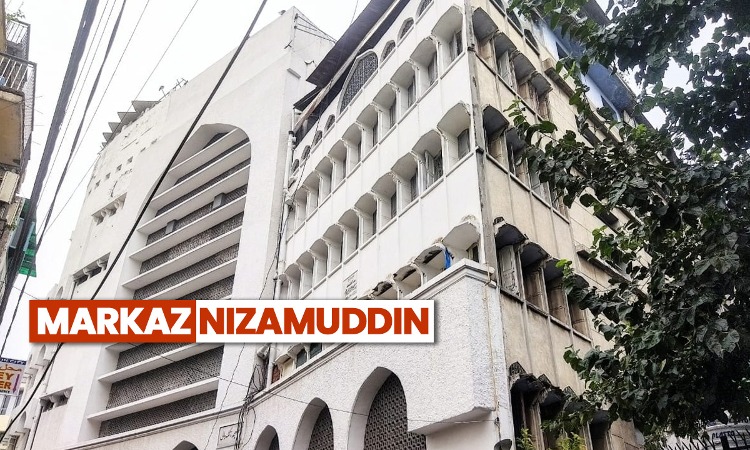
Tablighi Jamaat Building at Nizamuddin is called *Markaz Nizamuddin* or *Banglewali Masjid*. Its address is Basti Nizamuddin, South Delhi. It’s located right next to Hazrat Nizamuddin Auliya Dargah, but it’s a separate building.
It’s *NOT just a mosque* – It’s the World HQ of Tablighi Jamaat. It’s a 6-storey building housing also bare dormitories.
Originally built after 1857 by Mirza Ilahi Baksh – claimed to be a relative of last Mughal Emperor. Rebuilt later.
Architecture: The building features a multi-storey, white concrete structure characterized by prominent arched ground-floor entrances and rows of closely aligned arched windows across its upper floors.
Functional Layout: It accommodates massive prayer halls, residential quarters for scholars and traveling devotees, and administrative spaces spread over multiple floors. Can accommodate 2000+ people.
Ground floor has community kitchen, & shared dining hall.
This functions as a transit home, Muslim Prayer Hall, and logistics center.
*Split in Tablighi Jamaat*
Since 2015-16, Tablighi Jamat has split into 2 factions:
Main faction – *Nizamuddin Markaz* – led by *Maulana Saad Kandhlawi* (great-grandson of Ilyas).
*Breakaway faction* – Nerul, Mumbai / Raiwind – led by Maulana Ahmed Lad and Ibrahim Deola.
Split happened after death of Maulana Zubairul Hasan in 2014, over allegations of some arbitrary decisions by Maulana Saad in the past.
COVID MENACE:
2020 – Covid outbreak: 2,500+ members attended annual congregation from February 26 to March 15. Many Muslims arrived from Indonesia, Malaysia and Thailand. 1,500 left before lockdown, 1,000+ stayed and got trapped in Lock Down.
Delhi Police sealed the building in March 2020 under criminal conspiracy case.
It remained sealed for over a year. Delhi Waqf Board filed petition to reopen the building.
In *2024* – Delhi High Court allowed regulated use of the building again.
NATIONAL SECURITY PROBLEM:
- Nizamuddin locality itself is a big security threat.
- *Markaz Nizamuddin* can house 2,500 Muslims on transit, and many of them could he Hard Core Jihadis, and there is no check.
- This building shall be relocated, including H/O of Tablighi Jamaat on National Capital’s security ground. The Markaz keeps full records of each Jamaat and other Islamic members, who visited the place.
References:
- PEW RESEARCH.ORG) / Vedantu.com
- https://osf.io/download/3a8sh
- https://www.researchgate.net/publication/386240924_
- https://almanac.afpc.org/almanac/movements/tablighi-jamaat)
![NAVA-RATRA [ NINE NIGHTS]](https://sarasijmajumder.in/wp-content/uploads/2026/10/RAVAN-PORA-1.jpg)