
DISINVESTMENT OF IDBI
©INVESTMENT MONK
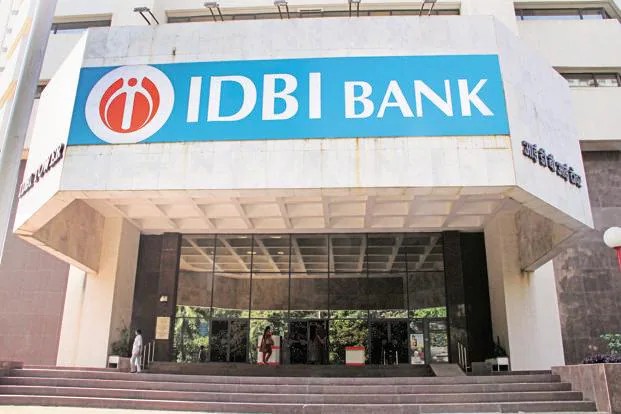
The Government of India has approved a landmark ₹52,878/- crore ($6.3 billion) strategic deal to sell a 60.72% controlling stake in IDBI Bank to a Canadian entity, making the single largest foreign direct investment (FDI) transaction in the history of India’s financial sector.
The Cabinet Committee on Economic Affairs (CCEA), chaired by Prime Minister Narendra Modi, cleared the transaction with M/s 10955230 Canada Inc., a subsidiary of the Toronto-based Fairfax Financial Holdings, which is led by Indian-Canadian billionaire Prem Watsa. The winning bid was finalized at ₹81 per share.
Before analyzing the Pros, and Cons of this deal—the historical background need to be discussed.
First, we discuss Strategic Disinvestment vs. Public Sector Privatization:
While both concepts involve a transition toward private market participation, they differ significantly in their execution, degree of control, and underlying economic rationale.
- Core Definitions:
- Strategic Disinvestment: The sale of a substantial portion of government shareholding in a Central Public Sector Enterprise (CPSE)—typically up to 50%, or a higher percentage as decided by the authorities—along with a mandatory transfer of management control to a private suitor.
- Privatization: A broader term meaning the absolute transfer of state ownership, property, or business operations to private hands. In privatization, the government completely transforms the entity into a private company, often retaining zero equity or reducing its presence to an insignificant minority stake.
- Key Differences:
Policy Execution
- Strategic Disinvestment: Handled meticulously via competitive institutional bidding monitored by the Department of Investment and Public Asset Management (DIPAM) under the Ministry of Finance.
- Privatization: Can take multiple routes beyond share sales, including complete denationalization, franchising, outsourcing public services, or forming management contracts.
Degree of Government Exit
- Strategic Disinvestment: The government frequently preserves a residual stake (e.g., retaining 15% in IDBI Bank while LIC retains 19%) to protect public interests, monitor board decisions, or capitalize on future valuation upticks.
- Privatization: Typically marks a comprehensive and permanent exit of state financial representation.
Philosophical Target
- Strategic Disinvestment: Guided by the economic maxim that “the government has no business to be in business,” targeting non-strategic sectors Where Private Markets Have Matured.
- Privatization: Usually driven by a direct ideological push to shrink public ownership and eliminate state monopolies entirely.
Part 2: The Evolution of Development Financial Institutions (DFIs)
The history of IDBI Bank is deeply tied to the rise, fall, and structural transformation of Development Financial Institutions (DFIs) in post-independent India.
Phase 1: Post-Independence & Capital Creation (1947–1990s)
- The Mandate: At independence, India’s commercial banks lacked the long-term capital required to fund heavy industrial infrastructure, manufacturing plants, and long-gestation public projects.
- Establishment of DFIs: The government set up specialized institutions to extend long-term credit. Key among them were the Industrial Finance Corporation of India (IFCI in 1948), the Industrial Credit and Investment Corporation of India (ICICI in 1955), and the Industrial Development Bank of India (IDBI in 1964).
- Funding Structure: These institutions were heavily insulated and backed by cheap credit lines from the Reserve Bank of India (RBI) and government budgetary support.
Phase 2: Liberalization & The Death of Traditional DFIs (1991–2010s)
- The Narasimham Committee Reforms (1991): Economic liberalization dismantled the system of subsidized government funding for DFIs. Traditional institutions were suddenly forced to raise capital from open, competitive markets at commercial interest rates.
- The Asset-Liability Mismatch: Because DFIs raised short-to-medium-term market funds but deployed them into long-term (15–20 year) infrastructure assets, they suffered crippling asset-liability mismatches.
- The Universal Banking Shift: To survive, primary DFIs converted into standard commercial universal banks. ICICI became ICICI Bank in 2002, and IDBI transformed into a commercial bank in 2004. As commercial lenders, they began competing for retail deposits to sustain short-term liquidity.
Phase 3: The NPA Crisis & The IDBI Turnaround-
NPA CRISIS OF PSU BANKS WERE GIFT OF UPA GOVERNMENTS.
- The Legacy of Bad Loans: Stripped of specialized DFI parameters but holding onto aggressive industrial portfolios, IDBI Bank accrued severe non-performing assets (NPAs). By 2018, its gross NPA ratio peaked at a critical 31.78%, forcing the RBI to place it under Prompt Corrective Action (PCA) and requiring massive state capital injections.
- The LIC Interim Intervention: In 2019, the state-backed Life Insurance Corporation (LIC) acquired a 51% stake to bail out the lender, transforming its status into a private-sector category bank for regulatory purposes while retaining majority public-sector ownership.
Phase 4: Modern Revival of Specialized DFIs (2021–Present)
- Recognizing the Gap: After traditional DFIs dissolved into commercial retail banks, India faced a severe infrastructure funding deficit. Commercial banks proved ill-equipped to bankroll massive long-term initiatives like the National Infrastructure Pipeline (NIP).
- The New Era of DFIs: Instead of forcing retail commercial banks to carry heavy project loads, the government revived specialized infrastructure vehicles. In 2021, it established the National Bank for Financing Infrastructure and Development (NaBFID) as a modern, professionally-managed DFI to exclusively bankroll core developmental projects.
This historic evolution culminated in the Cabinet’s approval to transition of IDBI Bank into an entirely private foreign-backed entity under Fairfax, allowing the government to unlock capital while letting dedicated market structures manage daily commercial lending.
NOW LET US DISCUSS THE DEAL:
Core Transaction Breakdown
- Total Stake Being Transferred: 60.72% majority control will go to Fairfax Canada.
- The Government’s Share: The Government of India is divesting a 30.48% stake, reducing its total ownership from 45.48% down to 15%. This individual share sale will yield over ₹26,000 crore for the state coffers.
- LIC’s Share: The Life Insurance Corporation of India (LIC) is divesting a 30.24% stake, bringing its remaining ownership down to 19%.
- Minority Stake Retention: Neither the government nor LIC is exiting the bank entirely; they will jointly retain a 34% residual holding (15% government, 19% LIC).
Why is the Government Making This Decision?
- Completing a Decade-Long Corporate Turnaround
Founded originally in 1964 as a development financial institution, IDBI Bank transformed into a commercial public sector lender but later spiraled into a major bad-loan crisis. Between 2010 and 2020, the government had to pump in roughly ₹25,000 crore in taxpayer funds to stabilize its balance sheet.
Having successfully turned the bank around—dropping its gross non-performing asset (NPA) ratio from a staggering 31.78% in 2018 to just 2.32% by March 2026—the government is capitalizing on this financial strength to hand off operational management to specialized private hands.
- Boosting Disinvestment & Fiscal Targets
This deal injects a massive momentum boost into India’s fiscal programs. The proceeds are expected to push the government’s total annual disinvestment revenue past the ₹1 lakh crore milestone for FY27, comfortable clearing its ₹80,000 crore budget target. These funds will help offset overshooting public subsidy bills without widening the fiscal deficit.
- Strategic Realignment and Institutional Support
Finance Minister Nirmala Sitharaman explicitly categorized the move as a “strategic restructuring” rather than a raw, outright disinvestment. The administration emphasizes that the backing of fresh foreign capital and private institutional governance will significantly strengthen IDBI Bank’s core modern mandate: effectively funding micro, small, and medium enterprises (MSMEs), emerging digital industries, and new entrepreneurs.
Strict Regulatory Conditions Imposed by the RBI
Because a majority stake in a domestic bank is going into foreign hands, the Reserve Bank of India (RBI) and the government have embedded rigid compliance safeguards into the share purchase agreement:
- The “One-Bank” Conflict Rule: RBI regulations strictly bar any single entity from owning two domestic commercial banks. Because Fairfax already controls a 40% stake in Kerala-based CSB Bank, it is legally required to either completely exit CSB Bank or merge CSB Bank with IDBI Bank within 2 years.
- Capital Lock-In: To prevent speculative asset-stripping, Fairfax’s invested capital is completely locked into the institution for a minimum of 5 years.
- Stake Glide Path: Fairfax must gradually reduce its overarching controlling holding down to 26% over a 15-year timeline arranged with the RBI.
- Identity Retention: To protect historical institutional trust, the new owners must retain the official “IDBI Bank” corporate name for at least 3 years following the close of the deal.
The agreement is slated to be fully executed before the end of the calendar year 2026, contingent on Fairfax clearing the final regulatory “fit-and-proper” assessments mandated by the banking regulator.
WHAT EMERGE:
- Our P.M. is visiting Canada in December. I think this deal will be signed then, as timeframe also matches.
- The share price of IDBI in the market today is about +/-Rs. 84.00/-; near transfer price. It will go up. What you think?
References:
All are available in Public Domains.