
GANGA WATER TREATY
PART-I: EXISING AGREEMENT
SARASIJ MAJUMDER
The treaty is set to expire in December 2026. Technical-level talks and joint water flow measurements are currently underway between India and Bangladesh through their Joint Rivers Commission to discuss its renewal and address Bangladesh’s long-standing demands for greater water guarantees during periods of severe scarcity.
But, discussing further, let us review the existing TREATY.
Existing Agreement:
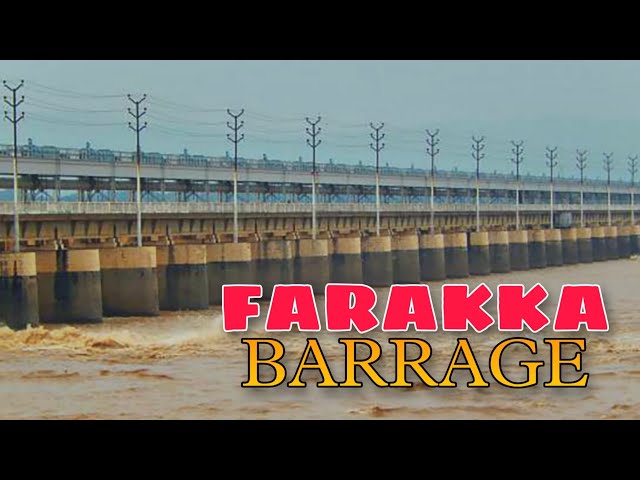
The existing Ganga Water Treaty is a 30-year bilateral agreement signed on December 12, 1996, by Indian Prime Minister H. D. Deve Gowda and the then Bangladesh’s Prime Minister Sheikh Hasina after India built Farakka Barrage on Ganga, upstream in West Bengal, India where the river branches to Bangladesh. It is set to expire on December 12, 2026.
Key Provisions of the Existing Agreement
- Scope and Purpose: It regulates the sharing of the Ganges/Ganga River waters at the Farakka Barrage in West Bengal during the dry (lean) season, which runs from January 1 to May 31 every year.
- Ten-Day Sharing Formula: The water distribution is based on a ten-day average flow measured at Farakka under a sharing schedule:
1.0 If availability at Farakka is 70,000 cusecs or less, equal division to both states.
2.0 If availability at Farakka is 70,000 cusecs-75,000 cusecs, 35,000 cusecs to Bangladesh, Balance of flow to India.
3.0 If availability at Farakka is 75,000 cusecs or more, 40,000 cusecs to India, balance of flow to Bangladesh.
4.0 Subject to the condition that India and Bangladesh each shall receive guaranteed35,000 cusecs of water in alternate three 10-day periods during the period March 11 to May 10.
5.0 Mid-April (April 11 to April 20) — The Leanest Period
According to the treaty’s historical data, April 11–20 is the absolute lowest flow period for the Ganga River at Farakka for the entire year.
- Historical Baseline Availability: The total expected water flow drops to its annual nadir of 50,733 cusecs.
- The Treaty Allocation: During this specific 10-day block, the sharing formula divides the water as follows:
- Bangladesh is guaranteed 27,633 cusecs to protect its downstream irrigation, delta ecology, and salinity levels.
- India receives the remaining 23,100 cusecs to channel into the feeder canal for flushing the Hooghly-Kolkata port system.
6.0 Late April (April 21 to April 30) — The Alternate Cycle
Immediately following the absolute lowest dip, the water volume experiences a minor historical recovery.
- Historical Baseline Availability: The expected total flow for the final 10 days of April rises to 54,733 cusecs.
- The Treaty Allocation:
- India is guaranteed 40,000 cusecs during this block.
- Bangladesh receives the remaining 14,733 cusecs.
7.0 Emergency Consultations: Unlike older agreements, the 1996 treaty does not include a permanent guaranteed minimum flow clause. If the available flow at Farakka drops below 50,000 cusecs in any ten-day period, both governments are required to hold immediate emergency consultations to adjust the share.
- Institutional Mechanism: The treaty established the Joint Rivers Commission (JRC) and a Joint Committee to observe and record water flows at Farakka and downstream points.
- Core Objective: The agreement so far balanced India’s need to flush and maintain the Hooghly-Kolkata port system against Bangladesh’s downstream needs for irrigation, fisheries, navigation, and salinity control.
However—it will expire on December-2026, and there is no ‘Auto Renewal Clause.’ And in the next phase, we will discuss problems of BIHAR, developed because of this Farakka Barrage.