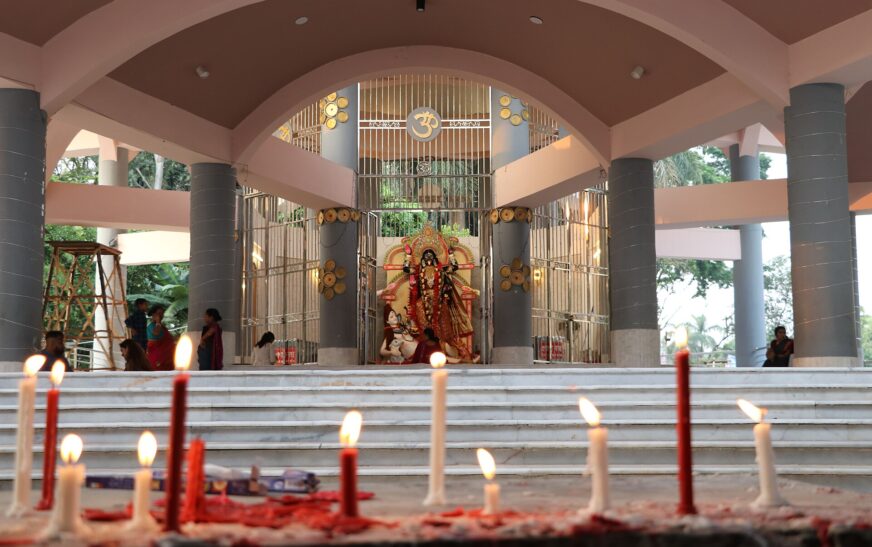
RAMNA KALIBARI, DHAKA
SARASIJ MAJUMDER
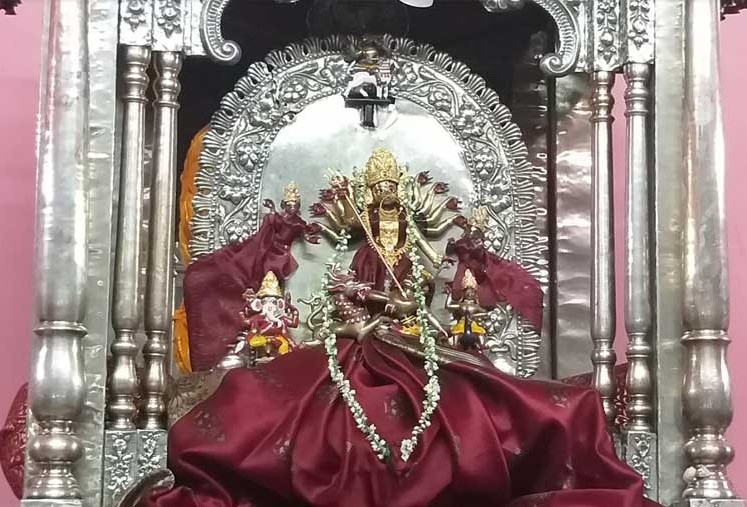
The Ramna Kalibari (Ramna Kali Mandir) in Dhaka, Bangladesh, traces its structural origins to the early 17th century during the Mughal Empire, when the Ramna area was developed as an open green space for Mughal high officials. The site’s spiritual foundation was established by Hindu ascetics of the Dashnami Sampradaya, specifically a saint named Gopal Giri from the Joshi Math of Badri Narayan. He founded the initial monastery on the grounds, which was later developed into the main temple structure by another mahant, Haricharan Giri.
Mughal-Era Origin of the Site-Mughal Green Space: In the early 1600s, Dhaka became a prominent provincial capital of ‘Bangla Suba’-as named by Jehangir, and trading hub under the Mughal Empire. The area was designated as Ramna (derived from the Persian word for “lawn” or “pasture”). It originally featured open fields, sprawling royal gardens, and garden houses for elite Mughal officials.
Evolution into a Spiritual Hub: Amidst these open landscapes, Hindu ascetics found a serene environment to establish monasteries and shrines, leading to the creation of this temple complex.
The Ascetics and Founders: The spiritual evolution of the site involves several overlapping historical accounts and folklore:
Gopal Giri and the “Kathgarh” ( কাঠঘর ) Monastery: Historical records note that roughly 500 years before the temple’s destruction in 1971, a saint belonging to the Joshi Math, a Dashanami Naga sadhu (Jyotirmath) of Badrinath named Gopal Giri arrived in Dhaka. He established a rudimentary mud-and-wood monastery at the location, which came to be known as Kathgarh (WOOD HOUSE).
The Shankaracharya Connection: The site was maintained by a group of wandering pilgrims and ascetics who were devout followers of Adi Sankaracharya.
Haricharan Giri: The definitive construction of the main, permanent temple structure took place during the early Mughal period (17th century) under the leadership of a resident Mahant (chief priest) named Haricharan Giri. He is widely credited with transitioning the monastery into a prominent temple dedicated to Goddess Kali.
Himalayan/Nepalese Folklore: Alongside mainstream accounts, regional folklore suggests that the temple was initially conceptualized by Himalayan devotees of Goddess Kali. They migrated south into the Bengal region. Over the centuries, this humble site grew into one of Dhaka’s most recognizable landmarks, eventually gaining further prominence in the early 20th century when the saint Ma Anandamayi built her ashram within its precincts.
EARLY 20TH-CENTURY EXPANSION:
The Iconic Spire: The original temple featured a distinctly tall, conical spire (shikhara) that rose several stories high, making it one of the tallest architectural landmarks in Dhaka at the time.
The Patronage of Rani Bilashmoni: In the early 1900s, the temple underwent major development under the patronage of Rani Bilashmoni Debi, the wife of Rajendra Narayan (the Zamindar of Bhawal). She funded structural enhancements and the renovation of a large adjacent lake to solve local water shortages.
A Blended Architectural Style: While fundamentally rooted in standard Bengali Hindu architecture, historians note that the original tall spire also subtly incorporated Islamic architectural elements, mirroring the syncretic Mughal-era styles present in Bengal during its evolution.
Ma Anandamayi Ashram (1929): The temple compound grew in prominence when the renowned spiritual saint Ma Anandamayi established her ashram inside the temple precincts. This drew thousands of additional devotees and spiritual seekers to the complex.
Historical Prominence: Before its demolition, the temple’s distinctively tall architectural spire (built largely under the patronage of Rani Bilashmoni Debi in the early 20th century) was the most prominent landmarks in Dhaka.
The Final Photograph: The height of the original spire became famous because it was captured in the background of iconic photographs of Sheikh Mujibur Rahman’s historic March 7, 1971 speech at the Ramna Race Course right before it was destroyed.
Destruction and Massacre (1971)
Operation Searchlight: On March 27, 1971, during the Bangladesh Liberation War, the Pakistani Army targeted the temple complex as part of a systematic campaign against Bengali Hindus of Bangladesh, who was primary component of ‘MUKTI BAHINI’, who fought Liberation war, initially supported by BSF clandestinely, & later Indian Army joined openly when Pakistan declared war by attacking India at the Western Front.
The Demolition: Moving into the compound on MARCH 27, 1971, with heavy artillery, explosives, and gasoline, the troops completely bulldozed and burned the main temple and ashram.
As usual—Muslims are known for destruction of world heritage since they took to ISLAM.
The Ramna Massacre: Along with destroying the main temple and the adjacent Ma Anandamoyi Ashram, Pakistani forces targeted the resident Hindu community. Priests, devotees, and residents—including the head priest, Paramananda Giri—were systematically lined up and executed. The attack resulted in the murder of more than 100 people, including the chief priest, Swami Paramananda Giri, as well as resident monks, devotees, and other local families.
Refer my ’BLOG’ on Operation Searchlight for further details.
POST-INDEPENDENCE TEMPORARY STRUCTURE: After Bangladesh gained independence in late 1971, a small, makeshift temple was initially set up on the ruined site inside Suhrawardy Udyan (the former Ramna Race Course) so that devotees could continue offering prayers. The worship was alive.
MODERN RECONSTRUCTION (2017–2021)
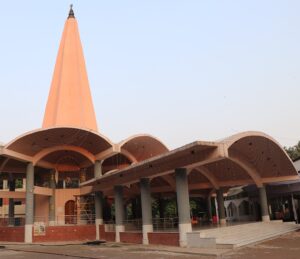
After remaining in ruins for decades, the temple was completely rebuilt with financial support from the Indian government.
The 2017 Bilateral Agreement: The formal, large-scale reconstruction of the complex was announced in October 2017. India’s late External Affairs Minister, Smt. Sushma Swaraj, pledged financial assistance from the Government of India for the comprehensive restoration of the shrine as part of a series of community development projects in Dhaka.
Design & Execution: The reconstruction was funded entirely by the government of India, with logistical assistance and land clearance provided by the government of Bangladesh under Prime Minister Sheikh Hasina. The architectural plan focused on reviving the religious site while incorporating a memorial element. A special plaque was installed on the site to engrave the names of the priests and devotees massacred there by the Pakistani Army in 1971.
The New Architecture & Modern Complex:
The newly rebuilt Ramna Kali Temple prioritized restoring the site’s spiritual importance while modernizing it for public gatherings and memorials.
Reconstructed Spire & Main Shrine: The core temple design aims to honour the silhouette of the old shrine, retaining a distinctive conical spire atop the main sanctorum to echo the majestic height of the pre-1971 structure.
Expanded Multi-Deity Complex: The contemporary complex spans roughly 2.25 acres. Beyond the main shrine dedicated to Goddess Kali, it features newer structures, including the Ma Durga Mandir and the Radha Krishna Mandir.
The Martyr’s Memorial Wall: A vital part of the new architecture is a dedicated memorial plaque that lists the names of the priests, sadhus, and devotees massacred by Pakistani forces on March 27, 1971. This transforms the complex into both a house of worship and a monument of historical remembrance.
Modern Amenities: While the ancient Dighi (large ritual pond) once sat in front of the temple for bathing, the modern facility incorporates cleaner landscaping, administrative blocks, and prayer spaces built to handle large crowds during festivals like Kali Puja and Durga Puja.
Inauguration (December 2021): The fully renovated temple was officially opened during a three-day state visit by the President of India, Ram Nath Kovind. His inauguration of the temple coincided beautifully with the Golden Jubilee (50th anniversary) of Bangladesh’s independence and the victory over Pakistani forces.
The newly rebuilt temple stands today not only as a religious hub but also as a permanent symbol of the deep cultural and historical ties between India and Bangladesh—which was also once part of India.
Much I wanted to visit Ramna once more—the turmoil in Bangladesh is delaying fulfillment of my desire.
- References: NEWS PAPERS, (ভোরের আলো-বাংলাদেশ), HT, IE, Public Domains.
Top Image : Dibya Paul