DEBI DHAKESHWARI RELOCTED IN KOLKATA
SARASIJ MAJUMDER
PREAMBLE:
The story began on ‘DURGASHTOMI’, 1968, when I visited a temple in Calcutta in the early morning, on the advice of my friend Tapan Dey—who stayed nearby and accompanied me.
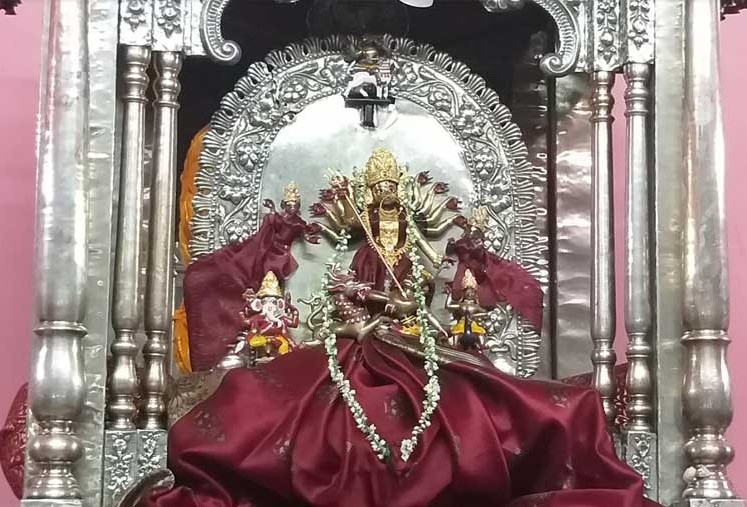
I observed that ‘DEVI’ Bigraha is different than traditional ‘DURGA’—eight of her hands were bare. She is having ‘AYUDH’ (weapons) THE trident holding in other two hands.
The worship and rituals were performed as per ‘NAV RATRA’ traditions, with complete vegetarian (cooked items, sweets, and fruits) menu. I offered ‘ANJALI’ and was introduced to Priest after ‘worship was completed. He was known to my friend.
The priest invited us to his Quarters- where we had ‘PRASADAM’.
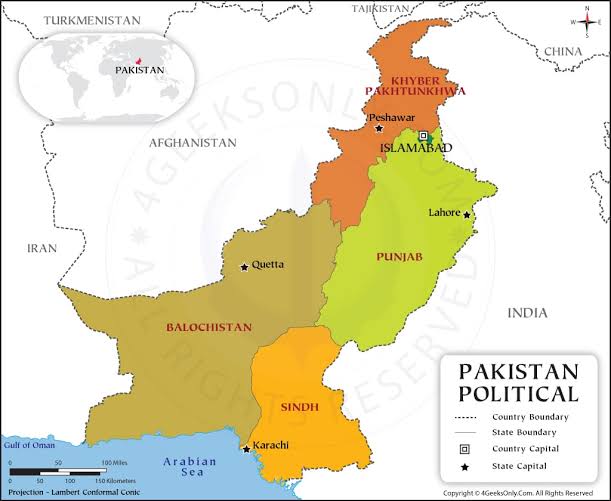
Then he told me that this ‘Bigraha’ is original Bigraha of Goddess Dhakeshwari—secretly brought (factually smuggled) from DHAKA in 1948 at Calcutta, fearing Muslim attack. They feared a Cow can be slaughtered by Muslims in Temple premises at Dhaka.
Dhaka had recorded history of RIOTS caused by Muslims. First known riot was in 1930; a much more ferocious attack on minority Hindus took place in1947 (after which my Mamas -Maternal Uncles) left for Calcutta, along with most of Hindus, and Riot continued through 1948. Riot continued beyond Partition, continuously, on tacit approval of Islamist Government.
HISTORY, and LEGEND:
According to legend, the Temple was founded sometime in the 12th century CE by the Hindu king of Bengal named Ballal Sen, son of Vijay Sen, who founded the ‘Sen Dynasty’ in Bengal. Ballal Sen was inspired to build the temple after finding a statue of the Goddess Durga buried in a particular part of the jungle, exactly as revealed to him in the dream.
Upon finishing construction, he installed the deity, calling her Dhakeshwari, or “the concealed Goddess,” as the temple was established in the thick Bengal jungle, and thus covered (ঢাকেশ্বরী means Dhaka, COVERED GODDESS, in Bengali) by the forest veil.
Alternately it is widely believed that the Queen, wife of King Bijay Sen went to Langolbond for bathing. Langolbond (commonly spelled Langalbandh) is a sacred Hindu pilgrimage site situated on the bank of the Brahmaputra River in the Narayanganj District of erstwhile East Bengal. It is widely renowned for hosting the annual Ashtami Snan, a holy bathing festival that draws millions of Hindu devotees from now Bangladesh, India, and Nepal who seek spiritual cleansing. On her way back she gave birth to a son, known to historians as Ballal Sen. After ascending to the throne, Ballal Sen built this temple.
Here also legends say that Ballal Sen once dreamt of the deity covered under the jungle. Ballal Sen uncovered the deity from there and built a temple, named it Dhakeswari. Whatever the legends describe, Hindus consider Dhakeshwari to be the presiding deity of Dhaka, (the city named after the Goddess) which is an incarnation or form of Goddess Durga the Adi Shakti.
Dhakeshwari is to Dhaka what Kali (of KALIGHAT) is to Kolkata or Meenakshi is to Madurai and ‘GANAPATI’ to Mumbai. Like many other towns and villages of the Indian subcontinent, Dhaka, the capital of Bengal since the Mughal era, derived its name from the goddess named Dhakeshwari.
Existing Dhakeshwari is also now the largest and oldest Hindu temple in Bangladesh, after Kali Temple of Ramna was destroyed by MUSLIMS (KHAN SENA). This temple is one of the famous Shakti Peethas in Indian Subcontinent. Here Sati’s Crown, with other associated Gems had fallen.
THE MIGRATION:
Preempting likely vandalism of temples during the communal clashes in East Bengal (then East Pakistan) after Partition of 1947, some of the influential Hindus associated with the Dhakeshwari temple decided to move the idol to Kolkata. A special aircraft was arranged in 1948 and the idol was tucked into a box without its ornaments and attire. This was then packed into an ordinary suitcase, wrapped in newspaper and clothes, carried by two gentlemen named Harihar Chakravarty and Rajendra Kishore Tiwari, who was a SEVAIYEET of the temple. A report published in Bengali daily, Jugantar Patrika, on June 27, 1950, which also mentions a certain Brajendra Dube, known as Lalababu in Dhaka, who was among those who arrived in Kolkata accompanying the idol.
The murti, once in Kolkata, was taken to the home of Debendranath Chowdhury, whose family owned the Banga Laxmi Cotton Mill. Soon Debendranath Chowdhury acquired land in Kumartuli and built a temple, where Dhakeshwari devi was installed in 1950 and the temple was named “Dhakeshwari Matar Mandir.” Deben Babu established some of the Goddess’ property for her daily services. The idol is about 2.0 feet tall, has ten arms, mounted on her lion in the form of KATYANI MAHISHASURMARDINI ‘DURGA’. On her two sides are Laxmi, Saraswati, Kartik, and Ganesh. A Tiwari family from Azamgarh was known to be appointed by the royal Sen dynasty for daily worship of the deity. In 1950, the descendants of that family came to Calcutta and were re-appointed, where they still serve the Goddess continuously.
I went there on that morning with Tapan. Tapan stays nearby—in AHIRITOLA.
Temple Address: Ward Number 9, Kumartuli, Sovabazar, Kolkata, West Bengal 700005 (near Durgacharan Street).
Timings: Open daily from 5:00 AM to 12:00 PM and 4:00 PM to 8:00 PM.
Worship Style: Unlike traditional Bengali customs and Rituals, the deity here is worshipped according to North Indian Navratri rituals with strictly vegetarian offerings.
DHAKESHWARI TEMPLE OF DHAKA:
The current architectural style of the existing temple at DHAKA cannot be dated to that period because of the numerous repairs, renovations, and rebuilding which have taken place over time. It may still be considered as an essential part of Dhaka’s cultural heritage. For ages till Partition, the temple has been held in great esteem.
Due to the Vested Property Act, a major portion of the old temple land at Dhaka is captured by Local Muslims. THE VESTED PROPERTY ACT is a law in Bangladesh that allows the Government to seize property from any individual if considered as an enemy of the state. In 1971, before the independence of Bangladesh, it was known as the Enemy Property Act. In 1974, the act was renamed the Vested Property Act. The act deprives a Bangladeshi Hindu Citizen the right of property simply by the declaration of that person as an enemy of the state.
It may not be wrong to have a similar property act in West Bengal. Quid Pro Quo!!
Current presiding deity there in Dhakeshwari Temple at DHAKA is a similar (but not same) to the original idol.
CONCLUSSION:
Shakti Ghoshal, currently head priest, also adds that during Durga Puja, 12 earthen lamps are placed on the Mangal Ghat, which burns all through the 9 nights.
“Kolkata has become the home of the original Dhakeshwari, but not a lot of people know about this,” said Dr. Shyamal Chowdhury, grandson of Debendranath Chowdhury, regretful that such a landmark event remains unknown to most Hindu Bengalees. “The whole operation was a secret to avoid the wrath of East Pakistan’s customs,” he said, recalling family lore. “But now, I hope the story can be told.”
Yes, Mr. Chowdhury—my this ‘BLOG’ will serve a little bit of that purpose. And I salute Chowdhury family to bring and establish “MATA DHAKEWSHWARI” in Kolkata.
REFERENCES:
Yamuna News. (East Pakistan)
The News Update.
Statesman/Calcutta
Jugantar/Calcutta (Now Closed)
Public Domains, and
Information collected by me from temple Priest.