
SANATANI,HINDU AND INDIAN
SARASIJ MAJUMDER
I thought of writing this ‘BLOG’, after reading a person, VERY WELL KNOWN to me posted in a WHATSAPP group that he prefers to be called a “HINDU”, rather than being called a ‘SANATANI’.
This convinced me that possibly this statement is an outcome of MISCONCEPTION’.
A “SANATANI” is a person who follows SANATAN DHARMA as defined in ancient texts of Bharata. Sanatan Dharma gradually evolved over a time, may be since 4,500 years.
SANATAN DHARMA:
The term Sanatan Dharma (Sanskrit: सनातन धर्म) translates literally to the “eternal” or “ageless” order, law, or path to live one’s life.
Linguistic Origin:
Sanatana (सनातन): Derived from the Sanskrit root meaning “eternal,” “perpetual,” “ancient,” or “continually enduring”.
Dharma (धर्म): Derived from the Sanskrit root ‘dhr’, which means “to uphold,” “to support,” or “to sustain”. In ancient usage, it refers to the cosmic order, moral duties, and universal laws that hold world and us together, jointly, and separately.
Philosophical and Textual Genesis:
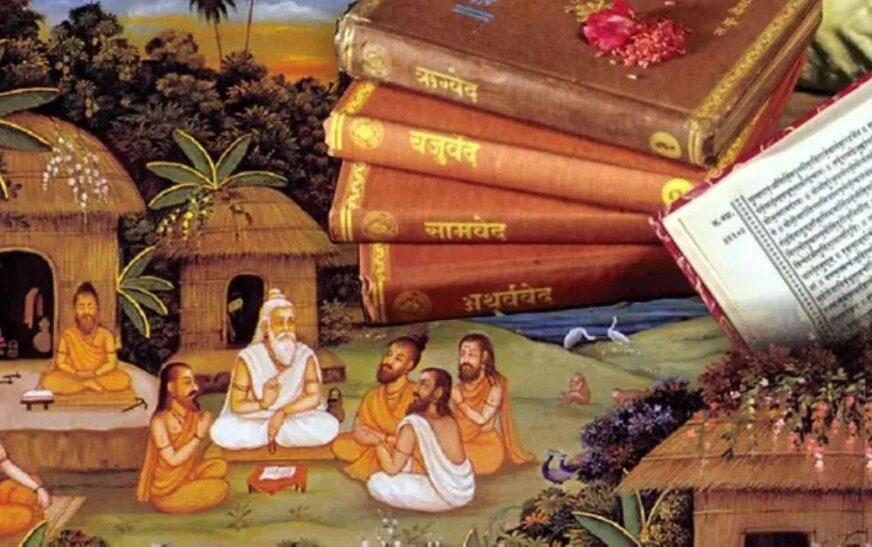
Ancient Roots: The conceptual components, including the ‘WORD’ appear across foundational classical texts like the Rigveda, the Mahabharata, the Manu Smriti, and the Bhagavata Purana, where it describes a cosmic, timeless order rather than a bounded institutional religion.
“अकृतयं नैव कृत्यं स्यात् प्राणत्यागेऽप्युपस्थिते।
न च कृत्यं परित्याज्यम् एष धर्मः सनातनः॥“
—पंचतंत्र तंत्र ४, श्लोक ४१ |
TRANSLATION: What should not be done must never be done, even if one’s life is at stake. And what should be done must not be abandoned. This is the eternal Dharma.
Apparently Authorless (Apauruṣeya): Unlike faiths tied to a specific historical prophet or singular founding moment, the tradition views its core truths as from unknown beginning to endless, and as realized by ancient sages (rishis) through spiritual insight rather than invented by a human author.
Modern Revival and Popularization:
19th-Century Colonial Context: While the philosophical ideas are ancient, the popularized use of the phrase Sanatana Dharma as a collective endonym (self-designation) for Hinduism surged during the late 19th century. However, Hinduism need to be explained separately.
Orthodox vs. Reformist Movements: Orthodox leaders and scholars revived the term to defend traditional, continuous Vedic practices against colonial-era critiques and syncretic movements of the time (such as the Arya Samaj and Brahmo Samaj).
HINDU:
The word Hindu is an EXONYM (a name given by outsiders), originating as a geographical term for the people and land beyond the Indus River. In this case, towards ‘EAST’ of INDUS RIVER.
Etymology and Origin
- Sanskrit Root: The term derives from the ancient Sanskrit word Sindhu, which means a large body of water, river, or ocean (specifically referring to the Indus River and its tributaries).
- Persian Shift: In the 6th century BCE, the Achaemenid Persians (under King Darius I) expanded to the Indus Valley. Because Old Persian lacked a hard “s” sound and converted initial “s” to “h”, Sindhu became Hindu.
- Greek Adoption: Following Alexander the Great’s campaigns, the Greeks dropped the aspirate “h” and adapted the word into “Indos”, which eventually led to the words India and Indian.
Evolution to a Religious Term
- Geographical to Cultural: For centuries, Hindu simply designated anyone living east of the Indus River regardless of their specific beliefs.
- Medieval Distinction: During the medieval period and Islamic conquests (from the 8th to 11th centuries CE onward), the term was increasingly used by external rulers and writers to separate the native Non-Muslim population of the subcontinent from Muslims, who became RULING CLASS.
- British Colonial Era: By the 18th and 19th centuries, European merchants and British administrators grouped various indigenous belief systems under the umbrella term Hindu. The word Hinduism was coined in the early 19th century (popularized around the 1830s–1870s).
- Traditional Self-Designation: Followers historically referred to their way of life and moral/religious duties as Sanatana Dharma (the “eternal order” or “eternal path”) rather than using the word Hinduism.
WHAT EMERGE:
Present confusion came, I think—followers of BJP/RSS define them mostly as ‘SANATANI’, and some people think this may be a very Dogmatic and Orthodox form of Hinduism.
It is not, and was never that way.
People who identify them as ‘Santani’ are only defining them in the same way as residents of (INDIA) Bharat Barsha have defined their Dharma, and themselves before ‘Achaemenid Persians’ started calling them as ‘Hindu’ and Europeans as ‘Indians’ and identifying them as other than ‘MUSLIMS’.
In time frame, a ‘SANATANI’ was called ‘HINDU’ from 550 BCE by Parsians, and ‘Indian’ by GREEKS from 326 BCE, when they first set foot on east coast of SINDHU(INDUS) RIVER.
Later, I observed Muslims call us ‘HINDUS’ and Christians call us ‘INDIANS’.
I don’t like it either way, went to the ‘ROOT’ and identify me as a ‘SANATANI’ , Bharatiya, and following ‘SANATAN DHARMA’. “ॐ”|
ANECDOTE:– I will discuss different branches of ‘SANATAN DHARMA’ in a separate ‘BLOG’.
REFERENCES: Already mentioned in the text.