
SHEIKH HASINA’S LAST GAMBLE
SARASIJ MAJUMDER
GEO-POLITICAL ANGLES:
Bangladesh sits at a strategic hinge between South and Southeast Asia besides the Bay of Bengal, placing Prime Minister Tarique Rahman’s “Bangladesh First” foreign policy at the intersection of major regional and global fault lines. Following the 2024 non-democratic ouster of Sheikh Hasina and the BNP’s return to power through a truncated election in February 2026, Dhaka has shifted from an India-friendly posture toward multi-aligned diversification—creating friction across several key fronts.
- India–Bangladesh Friction & Security Concerns
- Sheikh Hasina’s Exile & Extradition: India’s hosting of deposed Prime Minister Sheikh Hasina—who faces a death sentence in absentia, by a Kangaroo Court of Bangladesh, has announced plans to return to Bangladesh in December 2026— which remains a central source of diplomatic strain and domestic anti-India sentiment.
- Review of Bilateral Pacts: Moving away from Hasina’s friendly alignment with New Delhi, Rahman’s administration launched a review of 101 agreements and MoUs signed with India during her tenure, affecting transit, connectivity, and energy arrangements. RESULT: Bangladesh has no power, no oil, Industry stopped, and major food shortage with huge inflation.
- Water Sharing Deadlock: The 1996 Ganges Water Sharing Treaty is set to expire on December 12, 2026, while long-standing disagreements over the Teesta River have pushed Dhaka to explore Chinese-backed river management alternatives.
- Northeast India & the Siliguri Corridor: Because Bangladesh nearly surrounds India’s landlocked northeastern states and sits adjacent to the narrow Siliguri Corridor (“Chicken’s Neck”), New Delhi closely watches Dhaka’s border security, cross-border militancy red lines, and third-party infrastructure near its frontiers.
- China’s Expanding Footprint
- Infrastructure & Strategic Visits: As highlighted by Frontline and the World Geostrategic Insights, Rahman made China a centerpiece of his early foreign outreach—visiting Beijing in June 2026—to secure financing for major projects like the Teesta River Comprehensive Management and Restoration Project.
- Defense & Maritime Reach: China remains Bangladesh’s largest trading partner and primary defense supplier. Beijing’s role in building the submarine base at Cox’s Bazar, proposals around the Lalmonirhat airbase near the Siliguri Corridor, and drone/defense manufacturing deals give China strategic access to the Bay of Bengal while raising acute security alarms in New Delhi and Washington.
- US–China Competition in the Bay of Bengal
- Trade vs. Security Alignment: The United States is Bangladesh’s single largest export destination (particularly for ready-made garments) and a key partner in tariff negotiations, aviation (Boeing), and Indo-Pacific maritime security.
- Balancing Act: Washington has pressed for defense agreements (such as ACSA and GSOMIA) and democratic governance benchmarks, whereas Beijing opposes exclusive security groupings in the region. Dhaka faces constant pressure to attract Western capital and market access without alienating Chinese infrastructure and defense backing.
- Realignment Toward Pakistan, Türkiye & the Middle East
- Rapprochement with Pakistan: Ties with Islamabad—frozen or strained throughout the Awami League era—have thawed significantly since 2024, extending into trade and defense discussions (including interest in JF-17 fighter jets jointly developed by China and Pakistan), a shift viewed warily by India.
- Broader Muslim-World Outreach: As analyzed by the NUS Institute of South Asian Studies, Rahman’s government has expanded economic and defense-industry ties with Türkiye, Saudi Arabia, and Malaysia to reduce reliance on any single regional power, though deeper security pacts risk pulling Dhaka into wider Middle Eastern and South Asian rivalries.
- Myanmar & the Rohingya Crisis
- Protracted Refugee Burden: Bangladesh hosts over 1.1 to 1.3 million Rohingya refugees in Cox’s Bazar with dwindling international aid and no viable repatriation framework.
- Border Instability: Ongoing civil war in Myanmar’s Rakhine State—where the Arakan Army controls much of the border territory—creates spillover security threats, cross-border shelling, and trafficking risks along Bangladesh’s southeastern frontier, complicating both border management and regional connectivity corridors.
SHEIKH HASINA’S RETURN:

Sheikh Hasina first announced her plan to return to Bangladesh in December in a Reuters interview published on July 10, 2026.
She has subsequently reiterated and acted on this timeline through several key steps:
- Initial Announcement (July 10, 2026): As reported by Al Jazeera, Hasina told Reuters that she planned to return from exile in India alongside senior Awami League officials to legally challenge the banning of her party, despite facing a death sentence passed in absentia.
- Subsequent Reaffirmations (August–November 2026): She publicly repeated her December commitment on August 5, 2026, in an interview on September 22, 2026, and in statements to the Associated Press on November 4, 2026, and AFP on November 16, 2026—stating that “no threat of death will keep me away from my own country.”
- Formal Travel Document Request (November 9, 2026): Ahead of the planned December trip, Hasina formally applied to Bangladeshi authorities for a new passport and national identity card (NID), a request that Prime Minister Tarique Rahman’s government rejected.
In November 2026, the banned Awami League issued an eight-point charter of demands to Prime Minister Tarique Rahman’s government, pairing the manifesto with a five-day protest campaign (November 14–19) and calls for former Prime Minister Sheikh Hasina’s return from India in December 2026.
The Awami League’s Eight-Point Charter:
As reported by India Today, the party announced the charter via its official Telegram channel on November 13, 2026, directing party units on November 16 to submit memorandums to deputy commissioners, foreign embassies, and international organizations. Its eight demands center on both party rehabilitation and economic grievances:
- Lift the party ban. Revoke the suspension and ban on Awami League political activities (imposed in May 2025).
- Abolish the International Crimes Tribunal. Dissolve the tribunal that sentenced Sheikh Hasina to death in absentia in November 2025.
- Drop legal verdicts and cases. Withdraw what the party describes as “fabricated verdicts and false cases” against Hasina and Awami League leaders.
- Release political prisoners. Free detained Awami League leaders and activists.
- Control commodity prices. Curb inflation and stabilize the cost of essential goods.
- Reopen closed factories. Restart shuttered industrial units to restore jobs.
- Ensure public safety. Guarantee law, order, and security for citizens.
- Protect education rights. Ensure uninterrupted schooling and students’ right to education.
Government & Opposition Response
Rejection by Tarique Rahman’s Government: Prime Minister Tarique Rahman’s administration has rejected the demands, labeling Awami League protesters “terrorists” attempting to destabilize the country ahead of Hasina’s announced December return. Government ministers have maintained that Hasina—whose passport was revoked—can only return under the extradition treaty with India to face her sentence.
National Unity Talks: Following clashes and a nationwide lockdown called by the Awami League on November 19, Rahman initiated political dialogues on November 23, 2026, with parties from the July 2024 uprising—starting with the National Citizen Party (NCP) and planning talks with Bangladesh Jamaat-e-Islami—to form a united front against the Awami League.
Counter-Demands from Opposition Parties: As noted by The Daily Star, both the NCP and Jamaat-e-Islami have conditioned their support for Rahman’s anti-Awami League unity drive on the BNP government fully implementing the July National Charter (approved in the February 2026 referendum) and expediting trials and sentences against Hasina and the Awami League.
AWAMI LEAGUES PRESENT ACTIONS:
Despite remaining officially banned, the Awami League is executing a multi-phase street mobilization and political campaign aimed at forcing the government to allow Sheikh Hasina’s return in December 2026.
- Ongoing Protest Calendar (November 20–23, 2026)
Following its November 14–19 mobilization and nationwide lockdown, the party rolled out a follow-up schedule of nationwide programs announced via its online channels:
- Prayer Meetings (November 20): Organized special prayers at mosques, temples, churches, and pagodas for party activists killed or injured during what the party calls government-sponsored repression.
- Anti-Violence Processions (November 22): Called for protest marches condemning clashes in Sheikh Hasina’s stronghold of Gopalganj, arson attacks on Awami League leaders’ homes, and mob violence.
- Worker & Wage Demonstrations (November 23): Scheduled demonstrations focusing on fair wages for workers and broader economic grievances.
- Street Unrest & Official Denials
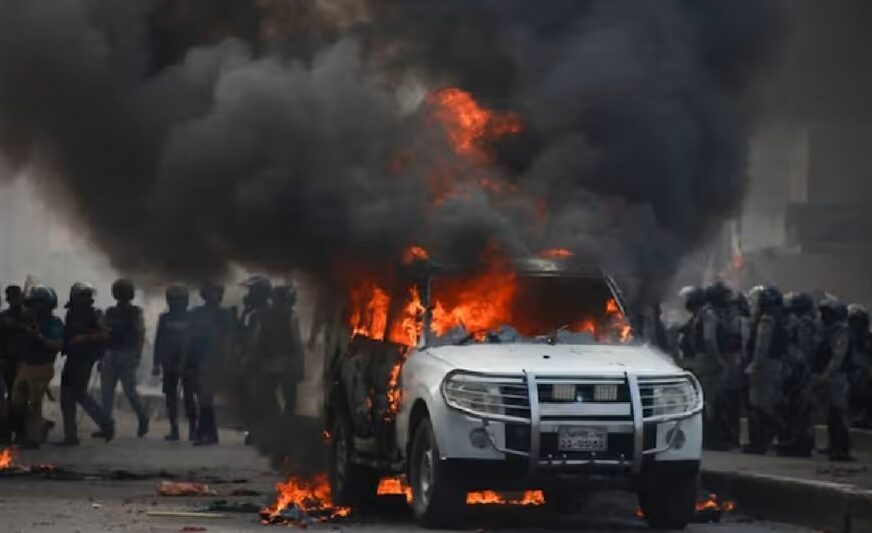
- Clashes, Arson, and Bombings: Over the past 10 days, police and local media have recorded dozens of crude bomb blasts, vehicle burnings, and clashes across at least 28 districts. Targets have included police stations in Gopalganj, Grameen Bank branches, the ancestral home of former Chief Adviser Muhammad Yunus, and residences of ruling BNP officials.
- Party Denials: As reported by The New York Times, the Awami League leadership has publicly distanced itself from the destruction—stating that it called only for peaceful protests, does not claim responsibility for arson or attacks, and blames the ruling establishment for instigating violence to justify a crackdown.
- Preparations for Sheikh Hasina’s Return
- Court Surrender Plan: In recent statements to international media, Hasina reiterated that she intends to return to Bangladesh in December 2026 and surrender before a court to challenge the charges against her, despite facing a death sentence passed in absentia.
- Diplomatic & Administrative Pressure: Having had her passport and national ID applications rejected by Dhaka, Hasina and senior exiled Awami League officials are campaigning abroad and pressuring diplomatic missions over the party’s ban and her travel rights.
- Government Counter-Actions
- Mass Arrests & Security Deployment: Prime Minister Tarique Rahman’s government has deployed Bangladesh Border Guard (BGB) platoons and paramilitary forces across key districts—including Gopalganj and Faridpur—while arresting hundreds of Awami League members and former ministers (such as former Education Minister Nurul Islam Nahid).
- Arrest Warning: On November 23, 2026, State Minister for Foreign Affairs Shama Obaed Islam told Reuters that Hasina will be immediately arrested and jailed if she attempts to enter Bangladesh, reiterating Dhaka’s demand that India extradite her under their bilateral treaty.
INDIA’S RESPONSE:
In November 2026, New Delhi’s official message to Dhaka—delivered through Ministry of External Affairs (MEA) spokesperson Randhir Jaiswal—has emphasized diplomatic restraint, non-interference, and a desire for a “positive, constructive, and forward-looking” relationship despite escalating unrest over Sheikh Hasina’s planned December return.
Key Pillars of India’s Message (November 2026)
- Forward-Looking Bilateral Ties: During MEA briefings on November 3, 13, and 20, 2026, Jaiswal reiterated that India seeks stable, constructive ties rooted in shared history and cultural links, avoiding escalation in response to sharp rhetoric from Prime Minister Tarique Rahman’s administration.
- Non-Interference in Domestic Politics: Responding directly to remarks from Rahman accusing Hasina and her allies of conspiring from abroad, the MEA stated on November 20, 2026, that India does not comment on Bangladesh’s internal developments.
- Rejection of Anti-Bangladesh Activity Claims: New Delhi formally dismissed Dhaka’s allegations that Awami League members are operating against Bangladesh from Indian soil, stating that India “does not permit political actions against other countries to be carried out within its territory”.
- Legal Framing on Extradition & Return: As reported by The Hindu, Jaiswal described Bangladesh’s extradition request for Sheikh Hasina as a “legal matter” that is being examined and will be dealt with accordingly. On November 20, 2026, India also declined to engage with media reports claiming New Delhi had set conditions for Hasina’s return.
MY ASSUMPTION: Verbally, through the Indian Ambassador, having the rank of a MINISTER, India must have told Dhaka what India wants.
Dhaka’s Response:
- No Conditions on Return: Bangladeshi officials, including advisers to Prime Minister Rahman, have stated that India cannot dictate terms regarding Hasina’s return.
- Demand for Treaty Compliance: On November 23, 2026, State Minister for Foreign Affairs Shama Obaed Islam reiterated that Dhaka expects India to honor the bilateral extradition treaty and hand Hasina over to face her sentence, warning she will be immediately arrested and jailed if she enters Bangladesh.
A REPEATED STATEMENT.
WHAT EMERGES:
- Important Cities in Bangladesh are on the verge of CIVIL WAR. Ultimately it will encircle DHACCA. Awami league proceeded step by step. External support is expected to be there.
- Military refused to take any action on protesting people of Awami League.
- Madame Hasina wants to enter by Land Route at ‘PETRAPOL’ border. A very bold GAMBLE’. Lakhs of people will form a ‘HUMAN SHIELD’ once she sets her feet on Bangladesh.
- Many BNP ministers have resigned already.
- Possibility is there that in the same way, Awami League people may force Tarikh Rehman to leave the country. Will China, or Pakistan shelter him?