
STRING THEOREY AND ASHOK SEN
SARASIJ MAJUMDER
I read about String Theory before, but first read about Professor Ashoke Sen some years ago—most likely in an article in ‘SCIENCE REPORTER’. That was how I first learned about his work.
Now, following his receipt of the Oskar Klein Medal, every Bengalee is cheering for him. He is the first Indian physicist to receive this honor. Many suggest that he might even get a Nobel Prize in the future—a prospect I, too, would love to see realized.
But a question remains: how many of us know what Ashoke Sen’s work is about?
We tend to rejoice whenever one of our own receives a major award, which is certainly a wonderful thing. Yet, it is also worth to understand *why* he received the honor. I will attempt to explain it as simply as I can, based on my own study, and understanding.
To explain how Nature functions, scientists earlier described four fundamental forces. One is Gravity—the force that keeps us firmly on the ground. It works between two bodies, or all bodies separated by some distance. Or not. Then there are the Electromagnetic Force, the Strong Nuclear Force, and the Weak Nuclear Force. The latter two operate primarily within the realm of the atom.
While these forces appear to act independently, scientists have already discovered connections between some of them; for instance, the electromagnetic force and the weak nuclear force can be unified within a single, broader theoretical framework. However, we do not yet possess an experimentally verified theory that encompasses all four forces. Scientists are, therefore, searching for a deeper, underlying principle that might govern them all.
Mr. Einstein worked most of his later life on ‘Unified Field Theorem’.
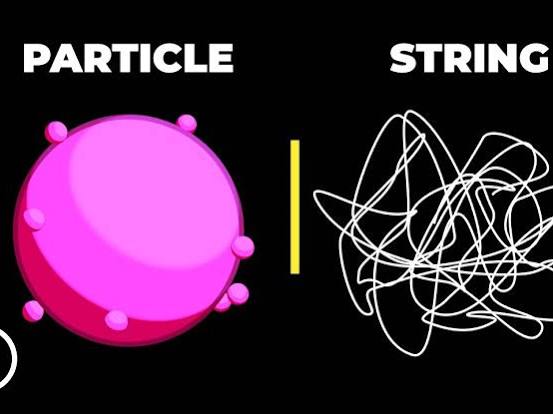
String theory is a theoretical framework in physics that proposes the fundamental building blocks of the universe are not zero-dimensional point particles, but rather tiny, one-dimensional vibrating “strings” of energy.
In traditional physics, particles like electrons and quarks are treated as dimensionless dots. String theory replaces these dots with minuscule filaments. Just as different vibrations on a violin string create different musical notes, the unique vibrational patterns of these cosmic strings determine a particle’s mass, charge, and type.
Why Do Physicists Need It?
The primary goal of string theory is to become the “Theory of Everything.” Modern physics still relies on two highly accurate but fundamentally incompatible frameworks:
- General theory of Relativity: Einstein’s theory that explains the universe on a massive scale (stars, galaxies, and gravity).
- Quantum Mechanics: The theory that explains the universe on a microscopic scale (atoms and subatomic particles, BOSON being one of them).
When scientists try to apply quantum mathematics to gravity (such as inside a black hole or now on the Big Bang), the calculations break down and produce mathematical nonsense like “infinite probabilities.” Because string theory naturally predicts a particle called the graviton (the hypothetical quantum carrier of gravitational force), it successfully bridges this gap and creates a workable model of quantum gravity.
Core Characteristics of the Theory:
Shape & Form: Strings can be open (like a piece of thread) or closed (like a rubber band).
Scale: Strings are unbelievably tiny—roughly the size of the Planck length (10⁻³³ cm), making them far too small to see with current technology.
Dimensions: The mathematics of the theory only functions consistently if the universe contains 10 or 11 dimensions, meaning there are extra, hidden spatial dimensions curled up at a subatomic scale. To discuss the dimensions here will digress us.
Current Status and Criticism
Despite its mathematical elegance, opinions on string theory are largely mixed across the scientific community. Users frequently debate its utility because the theory has no direct experimental evidence and remains entirely mathematical.
Because strings are so small, testing the theory directly requires energy levels far beyond what our current particle accelerators can produce. Critics argue it may not even be a true scientific theory if it cannot be proven or disproven, while proponents view it as an invaluable tool that has unlocked profound breakthroughs in mathematics and quantum black hole research.
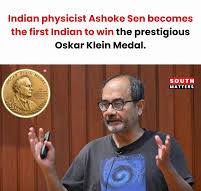 Ashoke Sen has worked on this string theory. He has demonstrated deep connections between concepts that, at first glance, appear unrelated. He has also performed highly intricate calculations to better understand the nature of black holes.
A question might arise here: if string theory has not yet been experimentally proven, why does Ashoke Sen receive such high acclaim?
You see, even before a theory is experimentally verified, one must seek answers to complex questions within it. Do the mathematical calculations hold up? Does a calculation performed in one way yield the same result when approached from a different perspective?
Is there a link between two theories that seem, on the surface, to be entirely distinct?
Ashoke Sen has made significant contributions to several such major problems. For instance, he helped demonstrate a precise correspondence between results derived from gravitational calculations regarding black holes and those obtained through entirely different methods within string theory. For physicists, this represents a breakthrough, and theoretical achievement.
However, there is no an experimental proof of string theory itself. He is held in such high regard because he has advanced in this challenging field of research considerably—not because he has proven that our universe is definitively composed of strings.
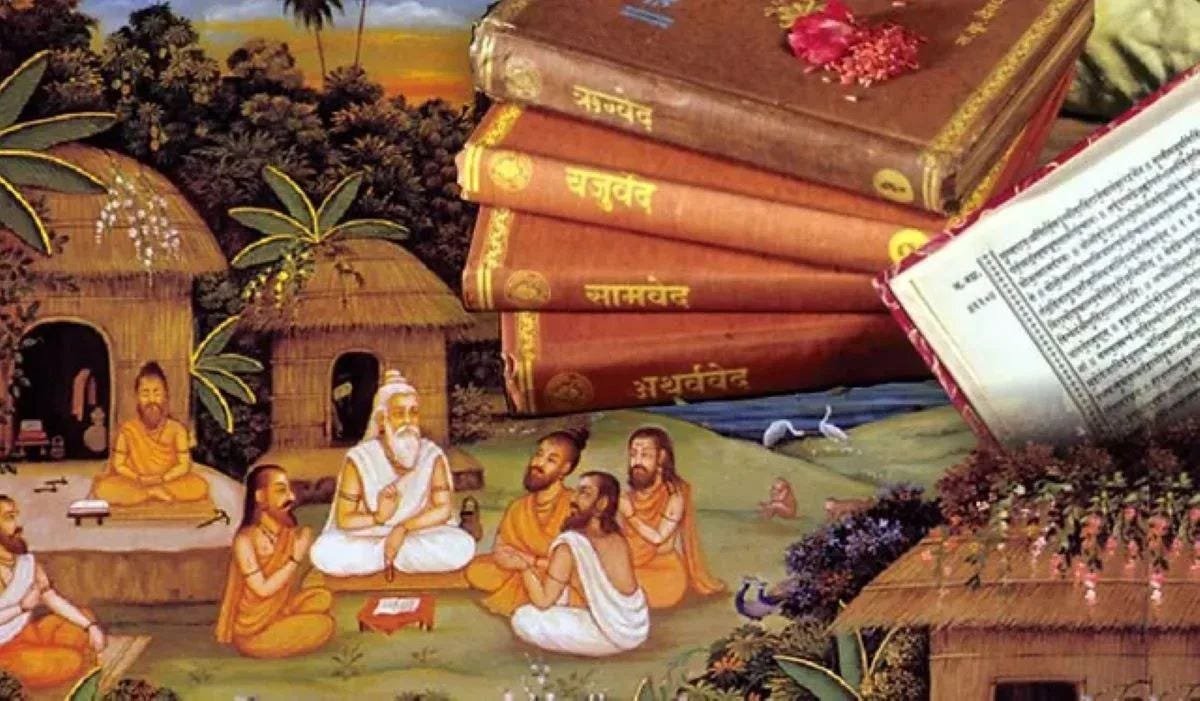
There is a concept in our philosophy: “from the one to the many.” This reminds me a Shlokam from RigVeda:-
इन्द्रं॑ मि॒त्रं वरु॑णम॒ग्निमा॑हु॒रथो॑ दि॒व्यः स सु॑प॒र्णो ग॒रुत्मा॑न् ।
एकं॒ सद्विप्रा॑ बहु॒धा व॑दन्त्य॒ग्निं य॒मं मा॑त॒रिश्वा॑नमाहुः ॥ ४६ ॥
from the Rig Veda (1.164.46)
The question of whether a profound, underlying connection exists between the vast diversity of phenomena in nature is, to me, a beautiful one. However, philosophical Postulation and scientific proof are not the same thing. As of now, no experimental evidence exists to support string theory.
Consider the case of Black Holes. At one time, they were purely a matter of Mathematics And Theory. The concept proposed by Einstein using theory of Gravitation, and later, scientists discovered observational evidence to support it—culminating in the first-ever image of a black hole, released in 2019. It is possible that, one day, similar evidence might be found for string theory—or perhaps it never will be. Scientists are currently searching for that very answer.
In some Chinese cities, I have seen initiatives to showcase scientists and their work on large public screens, accompanied by descriptions of their contributions. I believe we should adopt a similar approach here. If children only learn to recognize Celebrities of BOLYWOOD & GLAMOUR WORLD and never even hear the names of Scientists, how can an interest in science ever take root?
Individuals like Ashoke Sen do not belong solely to Bengal or India; they belong to the entire world. Do we remember Einstein merely as a “German scientist” or a “JEW”?
They don’t have “RACE” or “PLACE” to get limited to. They are ‘UNIVERSAL ASSETS’.
Let us, therefore, share the stories of people like Ashoke Sen with our children. It is not enough to simply mention the awards they have received; we should talk about the ideas they explored, the questions they posed, and the dedicated efforts they made to find the answers.
Perhaps such stories will spark curiosity in a young boy or girl in Bengal, and India. They might wonder, “Could I also ask a question to which no one yet knows the answer?” That is where a scientific mind can begin to emerge—a mindset that does not blindly accept everything it hears, but instead asks, “What is the evidence for this?” And if an answer isn’t immediately found, such a child would not be discouraged, but would continue the search.
I hope that the next generation in Bengal and India will see many more young people grow up who can think beyond boundary, and who find joy in the discovery of new knowledge—leading them to fall in love with science. Among them, perhaps, lies a future Ashoke Sen, Satyen Bose, Meghnad Saha, C. V. Raman… and many forerunners .
SOURCES:
- Science Reporter—I am reading it for the last 48 years. Now I have a digital subscription.
- https://home.icts.res.in/~sen/
- There are many public domains to get ideas on the subject.
- COPY RIGHT: SARASIJ MAJUMDER