
SANATAN (HINDU) DHARMA DEMANDS WARRIOR MONKS
SOURCE: LESSONS FROM GITA
SARASIJ MAJUMDER
In the swirling chaos of our times, when deceit parades as truth and cowardice masquerades as tolerance, the call of Dharma ( not Religion, I have explained the difference in a separate ‘BLOG’) becomes Most Urgent. The world of 2026 is no different in essence from the battlefield of Kurukshetra, happened 4 thousands of years ago. The characters change, the weapons change, the costumes change, but the eternal conflict remains the same: the fight between Dharma and Adharma, between righteousness and unrighteousness, between the preservation of order and the triumph over chaos.
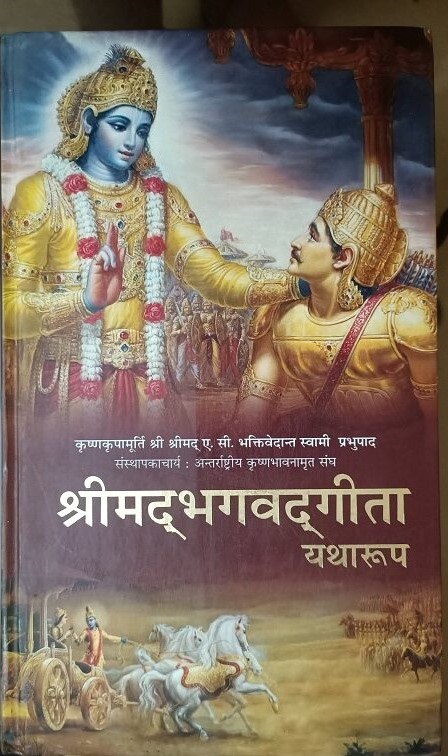
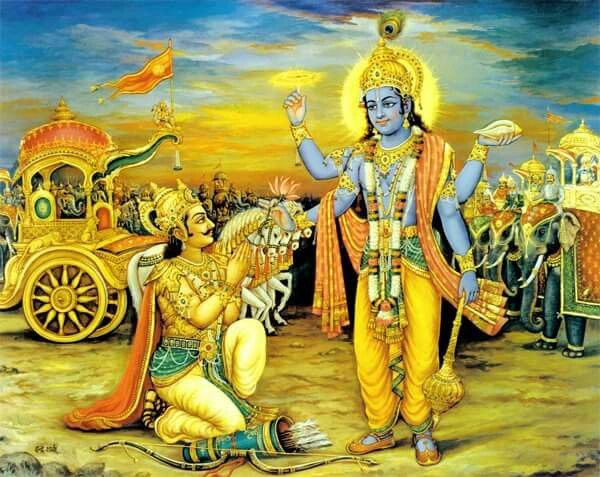
Lord Krishna, standing with Arjuna at that moment of paralysis and despair, delivered not just counsel for a warrior but a timeless philosophy for humanity. His words were not mere metaphysics—they were battle instructions, principles of a Just War for Dharma. Today, when political hypocrisy, cultural dilution, and civilizational amnesia threaten Bharat, Krishna’s teachings demand to be revisited with the urgency of a fire alarm ringing in the dead of night.
The first lesson in any Just War comes from Arjuna’s dilemma. On the battlefield, Arjuna was not afraid of fighting; he was afraid of the consequences. He was paralysed by attachment—facing his gurus, elders, cousins, and friends as enemies. His bow slipped, his heart sank, and he declared that renunciation was nobler than slaughter. This paralysis mirrors our present time. Many of us know what is right. We see injustice, corruption, exploitation, and betrayal of national interest. Yet we hesitate, rationalize, or retreat, convincing ourselves that silence is peace. We argue, like Arjuna, that perhaps walking away is better than confronting. Krishna shatters this illusion. He tells Arjuna—and us—that to abandon one’s duty in the name of false compassion is not Nobility but Cowardice. A Jihadi Muslim, and his accomplices are not to be granted ‘HUMAN RIGHTS’.
Krishna’s central message is ruthless in its clarity: Dharma is higher than personal relationships, higher than comfort, higher even than life itself. A war fought for Dharma is not about revenge or greed; it is about restoring balance. He tells Arjuna, “Your sorrow is illusion. The soul is eternal. Death is inevitable. What matters is your duty.” Here lies the cornerstone of a Just War. DHARMA YUDDH. It is not about who we face, but about WHAT we fight for. In today’s Bengal—Women are fighting for Rs.3,000/- ANNAPURNA VANDER!! Mamata Banerjee fought for POWER to practice Monumental Corruption! If injustice comes wearing the face of a brother, it must still be opposed. If betrayal comes wrapped in the cloak of tradition, it must still be exposed. Dharma shall not be swayed by sentiment. It demands clarity, courage, and detachment, and often SACRIFICE.
Krishna’s teaching of Nishkama Karma—action without attachment to results—is not an escape from responsibility but a sharpening of it. In a Just War, one does not fight for victory, for glory, or for applause. One fights because it is one’s duty to fight. Whether one wins or falls becomes secondary; what matters is that one stood on the side of Dharma. This is the antidote to the cynicism of our age, where people ask, “What’s the point? Can one person really change anything?” Krishna answers: it is not your role to measure the universe’s balance sheet of justice; it is your role to act where you are placed, with the tools you have. The outcome is not yours to control, but the action is yours to own and execute.
If we distil Krishna’s counsel into the language of modern ethics, a Just War for Dharma has these principles:
Right Cause—the war must be fought to defend Dharma, not for personal gain, ego, or conquest.
Right Intention—the warrior must act from duty, not hatred or vengeance.
Right Authority—one does not wage war as a vigilante but as part of a larger order, whether as a soldier, a citizen, or a voice for truth.
Last Resort—diplomacy, dialogue, and forgiveness may be attempted, but when Adharma persists, war becomes inevitable; proportionate action—the means of war must match the goal of restoring Dharma, not unleashing destruction for its own sake; clarity of Dharma—one must know, without confusion, which side stands for order and which for chaos. By these principles, the War at Kurukshetra in Mahabharata was a Just War. Krishna himself tried negotiation. He went to Hastinapur, stood in Duryodhana’s court, and demanded just five villages for the Pandavas. Duryodhana refused even a needle’s worth of land. At that point, diplomacy was exhausted, and war was no longer a choice—it was destiny.
It is crucial to understand that Krishna was not NEUTRAL. He did not preach passivity. He actively strategized for Dharma. He guided the Pandavas in tactics—how to defeat Bhishma, how to counter Drona, how to slay Karna when his chariot was stuck, how to make Bhima fulfil his vow against Duryodhana. Critics accuse Krishna of being manipulative. But Krishna was clear: when Adharma refuses to play by the rules, Dharma cannot bind itself to naïve purity. Any means itself becomes Dharma when its aim is righteous. In this context—collecting MPs from opposition is alright for BJP to achieve greater Goal. This is the hard truth our society avoids. Too many people want Dharma without conflict, truth without confrontation, justice without struggle. Krishna shows us that many times Dharma requires not the prayer beads but the bowstring.
Look around Bharat today. We see forces working to fracture our civilisational confidence. We see opportunists who wear nationalism on their sleeves but sell the nation in closed-door deals. We see cultural invaders who mock tradition but gorge on its hospitality. We see a political class where, like the Kauravas, arrogance is worshipped and loyalty is bought. What then is the duty of citizens, thinkers, and leaders? To retreat into Arjuna’s paralysis, or to rise in Krishna’s call? A Just War for Dharma today may not always be fought with arrows and swords, but with truth against propaganda, with law against corruption, with education against ignorance, with courage against fear, and with BALLOTS—AGAINST BULLETS. People of Bengal showed this when TMC’s Bullets were neutralized.
The battlefield is not only outside. Krishna reminds us that the fiercest war is within. Every individual’s mind is a Kurukshetra where Dharma and Adharma clash daily. Laziness battles discipline, honesty battles temptation, courage battles fear. A Just War for Dharma begins by conquering the self. Only then can one fight the outer wars with integrity.
Finally, Krishna makes it clear: Dharma is Sanatan. Eternal. It is not subject to majority vote, fashionable opinion, or political expediency. It is the cosmic law that sustains creation. To fight for Dharma is not to be regressive—it is to be aligned with the fundamental order of the universe. To abandon Dharma is not to be modern—it is to invite chaos.
As I reflect on Krishna’s teachings, I am struck by how uncompromising they are. He did not offer Arjuna a middle path of comfort. He demanded courage, clarity, and commitment. He demanded war when war was just. We too must embrace this truth. A Just War for Dharma is not a relic of mythology; it is the necessity of every age. Whether in politics, society, or the personal sphere, when Adharma rises, Dharma must answer. Neutrality is not virtue; it is betrayal. The time for paralysis is over. The time for clarity has come. Kurukshetra is not behind us—it is around us. And Krishna’s voice still echoes: “Stand up, Arjuna. Pick up your bow. Fight for Dharma.” Because in the end, it is not victory that matters. It is whether we fought on the side of Truth and Dharma.