

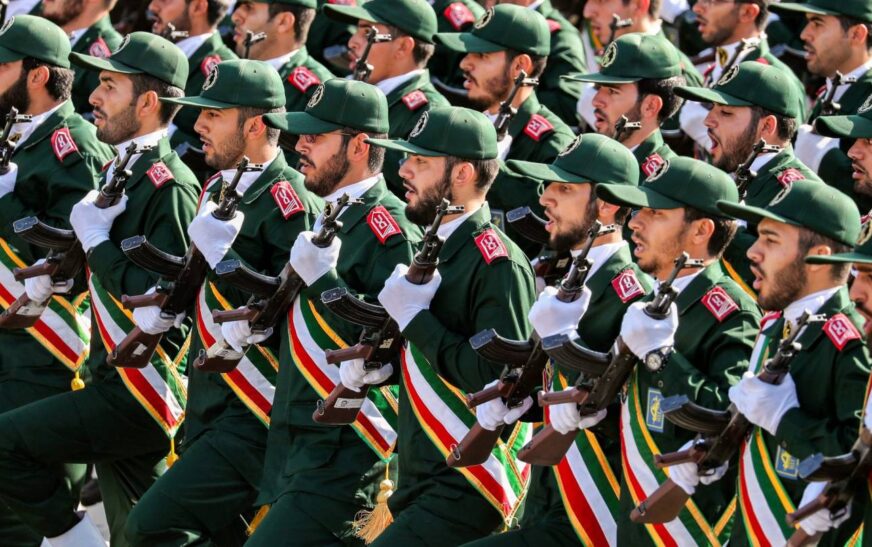
THE ISLAMIC REVOLUTIONARY GUARD CORPS
SARASIJ MAJUMDER
The most crucial element of IRAN WAR is ‘ISLAMIC REVOLUTIONARY GUARD CORPS’—in short—IRGC. Unless you know about them, you will not be able to follow the course of this WAR.
The Islamic Revolutionary Guard Corps (IRGC), or Sepah-e Pasdaran, is the most powerful independent wing of the Iranian Armed Forces established in 1979 to protect the country’s Islamic system (SHIA) and provide a counterweight to the regular military (Artesh).
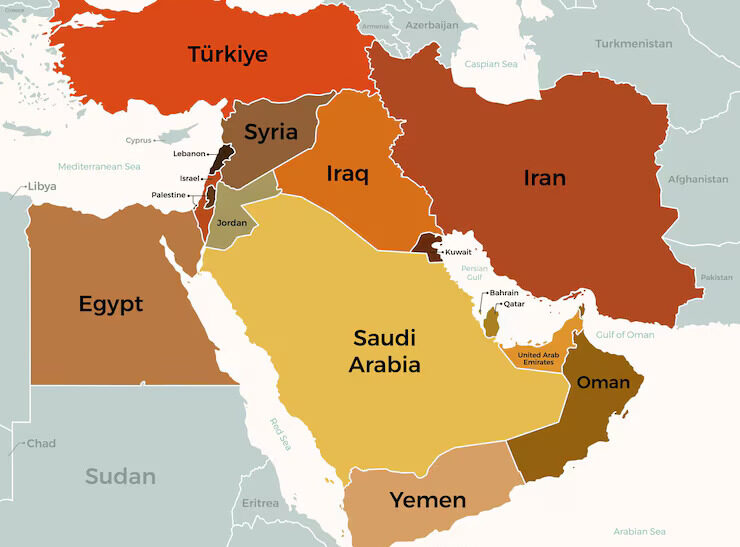
As of March 2026, the IRGC is the central actor in this theater of regional conflict involving Israel and the United States. IRAN considers neighbouring Arab states having Military Bases of USA are also enemy of IRAN, in this war.
Recent Developments (2025–2026)
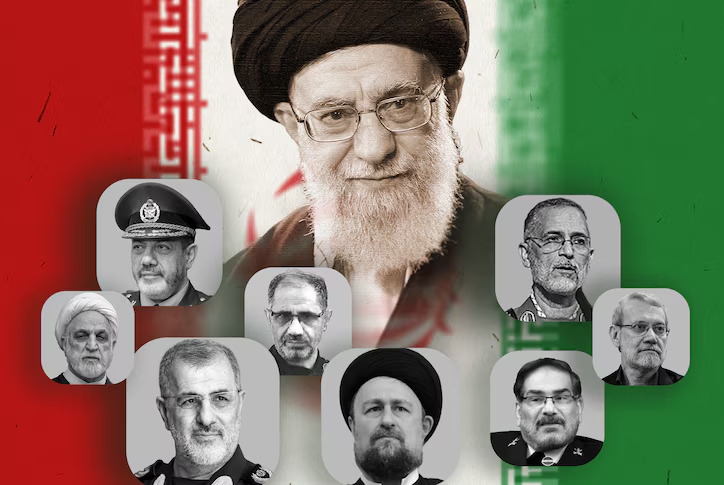
Leadership Losses: IRGC Chief Mohammad Pakpour was reportedly killed on 28 February 2026 during joint Israeli-US attacks. His predecessor, Hossein Salami, was killed before in Israeli strikes on 13 June 2025.
New Command: Brigadier General Ahmad Vahidi is appointed as the new Commander-in-Chief in March 2026.
On 3 January 2020, Qasem Soleimani, an Iranian major general, was assassinated by an American drone strike ordered by U.S. president Donald Trump near Baghdad International Airport in Iraq, while travelling to meet Iraqi prime minister Adil Abdul-Mahdi
Ongoing Conflict: The IRGC has claimed responsibility for numerous missile and drone strikes against US bases in Saudi Arabia, Qatar, Kuwait, and the UAE, as well as direct attacks on Israel.
Domestic Unrest: The IRGC has been instrumental in the violent and brutal suppression of nationwide anti-government and anti-Islamic protests that began in 2025 and escalated in early 2026.
Terrorist Designations: In early 2026, the European Union officially designated the IRGC as a terrorist organization following its role in cracking down on protesters. Australia also listed it as a state sponsor terrorist in late 2025.
The IRGC operates as a “state-within-a-state,” with its own dedicated service branches:
Ground Forces: Primarily focused on internal security and suppressing any kind of dissent.
Aerospace Force: Manages Iran’s strategic ballistic missile program and its military space program (e.g., the Noor satellites).
Navy: Uses asymmetric “hit-and-run” tactics and small fast-attack crafts to control the Persian Gulf. It is understood that they have planted some ‘MINES’ in Strait of HORMUZ for obvious purposes!
Quds Force: The expeditionary arm responsible for unconventional warfare and managing regional proxy war by Hezbollah, Hamas, and the Houthis.
The IRGC’s Quds Force manages the “Axis of Resistance,” providing funding, training, and advanced weaponry to partner militias.
Lebanon (Hezbollah): The IRGC-Quds Force provides advanced drones and ballistic missile components. Despite heavy Israeli strikes in early March 2026 that eliminated several senior Quds Force commanders in Beirut, a small group of IRGC officers remains to coordinate Hezbollah’s military response.
Iraq & Syria: Pro-Iranian militias in Iraq have claimed responsibility for nearly 300 attacks on US facilities in Iraq, Jordan, and the Gulf since late February 2026. In Syria, the IRGC Ground Forces continue to support the Assad regime while maintaining missile production sites.
Yemen (Houthis): While the Houthis have remained largely on the sidelines of the direct March 2026 conflict, the IRGC considers them a “strategic lifeline.” The Quds Force has helped them build a domestic military-industrial network to produce weapons and maintain regional leverage.
Gulf States: In retaliation for hosting US forces, the IRGC has launched direct missile strikes against targets in the UAE (Al Dhafra Air Base), Qatar (Al Udeid Air Base), and Saudi Arabia in March 2026.
Basij: A large paramilitary volunteer militia used for domestic surveillance and policing.
Economic Power:
The IRGC controls a vast industrial empire, estimated to account for nearly two-thirds of Iran’s GDP. Through its engineering arm, Khatam al-Anbiya, it executes thousands of government contracts in sectors like energy, construction, and telecommunications, funded by sale of State’s Oil & Gas. Most of the construction are for ‘DEFENSE’ or ‘ATTACK’ purposes.
As of mid-March 2026, IRGC is engaged in a widespread regional conflicts against Israel and the United States, transitioning from a deterrent force to an active war-fighting entity.
Missile Capabilities & Strategic Shift:
The IRGC oversees the Middle East’s largest and most diverse missile arsenal, which has recently shifted toward mass-launch saturation tactics following the destruction of roughly more than half of its mobile launchers as on today. It had 3,000 Missiles at the beginning of war. Main Missile factory is destroyed. A large part of the underground Missile storage has become inaccessible. CIA & MOSSAD only knows how many are left.
Primary Weapons Systems:
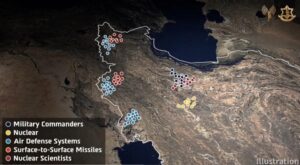
Iran possesses the largest and most diverse missile inventory in the Middle East, with ranges reaching up to 3,000 km.
Khorramshahr-4 (Kheibar): A liquid-fuel missile with a 2,000 km range and a 1,500 kg warhead, currently deployed in strikes against Israeli cities.
Fattah-2: On 4 March 2026, Iran reportedly conducted the first operational use of this hypersonic glide vehicle in the Middle East. I consider it was clandestinely supplied by CHINA, and renamed. We never heard IRAN tested this arsenal before.
Kheibar Shekan: A high-precision, solid-fuel missile (1,450 km range) used extensively in the ongoing “Operation True Promise 4”.
Sejjil: Iran’s premier solid-fuel MRBM, capable of reaching 2,500 km, allowing for rapid launch and high survivability.
Infrastructure: The IRGC utilizes hardened “Missile Cities”—deep underground facilities in provinces like Kermanshah and Semnan—to protect its inventory from US and Israeli airstrikes. I presume these are now largely destroyed, or made in-accessible.
I have shared an image.
It is controlling manufacturing and launching of Drones—like a cottage industry of IRAN.
Tactical Change: As of March 2026, the Islamic Revolutionary Guard Corps (IRGC) is actively deploying its missile arsenal across the Middle East in a major conflict involving Israel and the United States. IRGC implemented a shift to firing mainly missiles with one-ton warheads or heavier, abandoning drone-swarm tactics in an attempt to overwhelm modern missile defense systems like the Patriot and Arrow-3.
Overall IRGC Command: Following the death of IRGC chief Mohammad Pakpour on 28 February 2026, Brigadier General Ahmad Vahidi was appointed as the new Commander-in-Chief of the entire IRGC. Vahidi is a former Quds Force commander himself (1988–1997) and is known for his hardline stance.
Decentralized Structure: Due to the loss of several high-ranking generals, the IRGC has reportedly moved to a collective leadership model, empowering local commanders to act independently to survive “decapitation” strikes on the central command. This is very dangerous, in a war, without Central Control.
Late Ayatollah Khamenei has developed an animal which is a hybrid of multi-headed Hydra and Frankenstein.
The IRGC is way, way more violent than the Shah regime. The Shah was not ruthless, and he wouldn’t have killed 50,000 people on the streets for protesting. The Islamic State of Iran, controlled by IRGC is one of the most bloodthirsty regimes in human history, willing to kill almost unlimited numbers of people including Iranians to stay in power. The IRGC would also drop a nuclear bomb on Israel and kill 10 million people if it could — that’s why Iran can never be allowed to develop nuclear bomb.
Unless present regime is eliminated, no peaceful long-term solution is possible.
1 Comment
An excellent write up. Covers many dark areas hitherto unknown to many of us