THE DIWALI FESTIVAL
SARASIJ MAJUMDER
Five consecutive days of the Diwali festival, as celebrated mostly in North India. It is one of the most vibrant and significant celebrations in India. Each day holds its own unique cultural, spiritual, and social significance.
Here is the quick breakdown of what each day signifies:
- धनतेरस (Dhanteras): The festival of wealth and prosperity. People worship Goddess Lakshmi and Lord Dhanvantari (the god of health), and traditionally buy gold, silver, or new utensils.
- रूपचतुर्दशी (Roop Chaturdashi / Naraka Chaturdashi): Also known as Chhoti Diwali. It is the day for personal purification, beauty rituals (hence ‘Roop’), and celebrating the victory of light over the demon Narakasura.
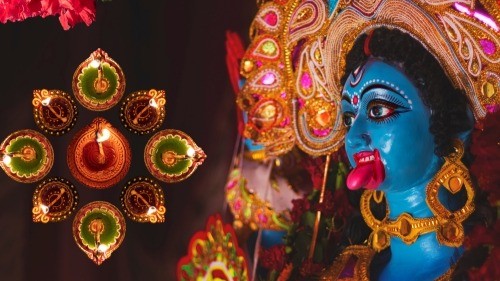
- शुभ दीपावली (Shubh Deepawali): The main festival of lights. Homes are illuminated with clay lamps (🪔), and grand Lakshmi Puja is performed in the evening to welcome peace, wealth, and joy.
- अन्नकूट (Annakut / Govardhan Puja): Celebrated the day after Diwali. Many varieties of vegetarian food (🧆) are prepared and offered to Lord Krishna, commemorating how he lifted the Govardhan Hill to protect villagers.
- भाईदूज (Bhai Dooj): The final day of the festivities, celebrating the eternal bond between brothers and sisters (👫). Sisters pray for their brothers’ long lives, and brothers offer gifts in return.
In eastern part of India, particularly in West Bengal, and in Nepal also—devi Kalika is worshipped on the ‘NO MOON’ night, known as ‘Amavasya Tithi’. This puja is done according to ‘Tantric’ ritual–the most difficult one.
The Priest(s), and who will assist in the puja—can’t eat or drink even water when Amavasya is set in and puja is completed.
The Puja starts by mid night.
Earlier there used to be ‘BLACK COLOURED HE GOAT’ sacrificed, and still 300 years before young man used to be sacrificed, recorded during colonial time at some places.
Now no life can be sacrificed at the altar of the Goddess. It is legally banned.
There are many forms of Devi ‘Kalika’.
Someday, I will elaborate this ‘BLOG’ with more details.
My forefathers belong to ‘Shaiba’ sect, and we are traditional worshippers of Devi Kalike, and Lord Shiva.
Jay-Ma-Kalike. Jay Baba Shiv-Shambhu.