
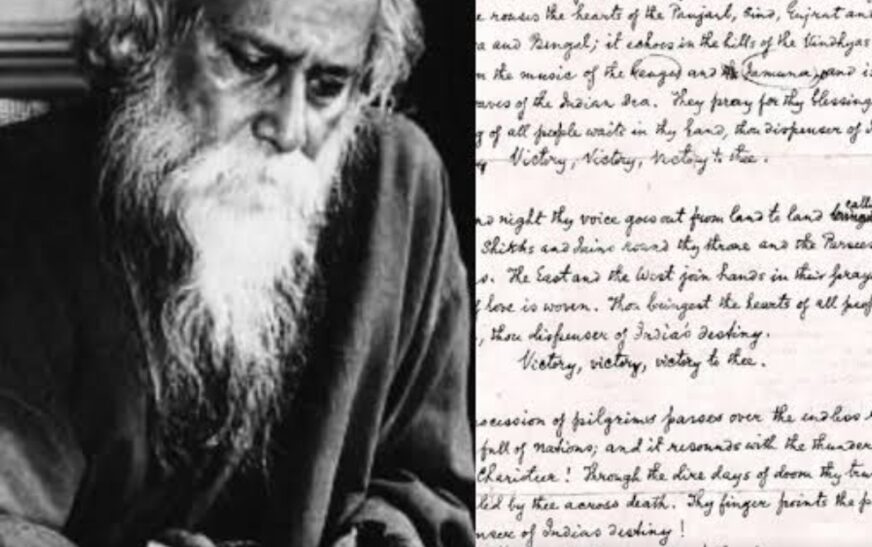
CONTROVERSIES ON NATIONAL ANTHEM
SARASIJ MAJUMDER
The propaganda that Rabindranath Tagore composed “Jana Gana Mana” as a welcome song for King George V was started by the then Anglo-Indians, most of whom considered themselves as British Nationals, and also by British newspapers of Calcutta. Specifically, publications like The Statesman and The Englishman published these reports on December 28, 1911, completely misrepresenting the events of the Indian National Congress session held in Calcutta on the second day.
The Background:
King Edward VII passed away on May 6, 1910, and George ascended the throne the same day as King George V.
On December 12, 1911, he arrived in India, was crowned in Delhi, and announced the relocation of the capital of British India from Calcutta to Delhi. Calcuttans had nothing to be cheerful about it!
The Reality:
The 26th session of the Congress was held in Calcutta from December 26 to 28, 1911. At that time, King George V of England had arrived in Calcutta via Delhi, accompanied by his wife.
On the second day of that session, i.e. on 27th December morning Sarala Devi Chaudhurani, Amala Das, Dinendranath Tagore, and Amal Home sang the song “Jana Gana Mana-Adhinayaka Jaya He.” in a collective chorus and they sang all the five stanzas. (only the first stanza of which is our National Anthem). The song was a patriotic and spiritual hymn praising the “Dispenser of India’s Destiny” (God), not a mortal king.
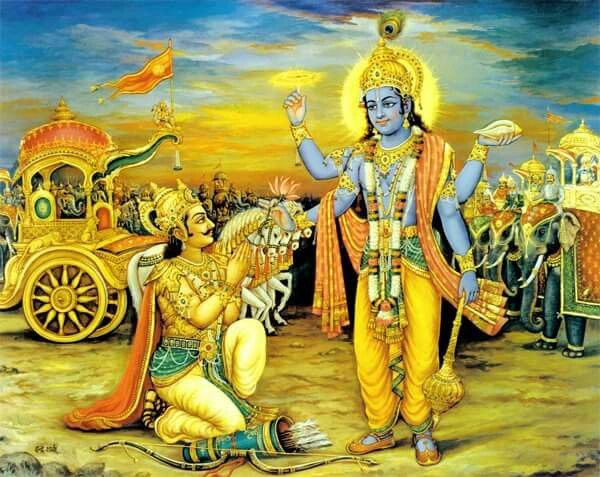
The fifth stanza is rather more like a a Brahmo hymn. “…Bharoto Bhagyo Bidhata,” composed by Rabindranath Tagore, serves as a profound, spiritual, and secular song celebrating India’s unity, rather than a tribute to a mortal monarch. Written in 1911 and translated by Tagore himself, the full poem portrays Divine God as the “Eternal Charioteer” and “Dispenser of Destiny”, who was guiding India through historical trials, rejecting colonial influence in its lyrics. The full five stanzas (lyrics and their English translations) are available through historical documentation sites, such as the Wikipedia-(enter for Bharoto Bhagyo Bidhata,) while analytical breakdowns of the text are provided by Scribd and Cultural India.
How the Confusion and Propaganda Began:
The controversy was born out of a reporting error where British journalists conflated two completely different musical performances:
The Second Song: Later on that same day, a resolution was passed to welcome King George V, following the opening song. Congress leaders extended a courteous welcome to the Emperor and his wife, and an entirely different Hindi song titled “Badshah Humara”—that was a song written in Hindi/Urdu by the nationalist leader Pandit Rambhuj Dutt Chaudhary.
The Media Blunder: The loyalist Anglo-Indian press missed the distinction. The Statesman falsely, and stupidly, reported, “The Bengali poet Rabindranath Tagore sang a song composed by him specially to welcome the emperor.” The Englishman published a nearly identical factually incorrect claim.
Conversely, Indian-led nationalist newspapers like ‘The Amrita Bazar Patrika’ and ‘The Bengalee’ accurately reported that Tagore’s song was a prayer to God, and that the song honoring King George V was performed afterwards by a separate group.
Tagore’s Defiant Rejection: Tagore himself was deeply offended by the rumor that people thought he would display such sycophancy. In a 10 November 1937 letter to his friend Pulin Bihari Sen, Tagore clarified the matter with severe anger:
“A certain high official in His Majesty’s service, who was also my friend, had requested that I write a song of felicitation towards the emperor. The request simply amazed me. It caused a great stir in my heart. In response to that great mental turmoil, I pronounced the victory of the ‘Bhagya Vidhata’ (Dispenser of Destiny) of India… That Lord of Destiny, that Reader of the Collective Mind of India, that Perennial Guide could never be George V, George VI, or any other George.”
Despite Tagore’s explicit clarifications, the reporting error from December 1911 became fuel for political propaganda against TAGORE that continues to be brought up by pseudo critics and viral internet misinformation to this day.
Let us consider another incident:
In another incident that further clarifies Rabindranath’s attitude towards King George V. The year 1935 marked the Silver Jubilee of King George V’s reign, an event that stirred excitement across the British colonies. At the initiative of prominent figures of the time, a commemorative volume was published to honor the King. Edited by Kedarnath Roy and Sajanikanta Das, the book was released in June 1935.
The cover bore the words ‘Rajat-Jayanti’ (Silver Jubilee) in red lettering. A copy of the book, I have seen earlier, at Victoria Memorials, and now also shall be available in Calcutta National Library, Belvedere.
The twenty-seven authors featured in this anthology included Jagadish Chandra Bose, Jadunath Sarkar, Suniti Kumar Chatterji, Kshitimohan Sen, Dhurjati Prasad Mukerji, and Debaprasad Ghosh, among others. Rabindranath’s name, however, was missing from this long list. Does this imply that a distinguished figure like Rabindranath was not invited to contribute?
He was invited, but he declined to participate. The editors stated, “…despite making a special effort, we could not include a piece by the world-renowned poet Rabindranath in this collection of essays… He was unable to write due to physical illness.”
That was the editors’ explanation. Yet, while Rabindranath did suffer from minor ailments around that time, he faced no serious health issues; indeed, he continued to write regularly during that period. The task of interpreting the situation is left to the reader of this ‘BLOG’.
Tagore translated himself “JANAGAMANA” in English and titled “The Morning Song of India”.
Key Facts About the Translation& the location: Tagore penned the English translation on February 28, 1919, while visiting the Besant Theosophical College in Madanapalle, Andhra Pradesh.
After Tagore translated the song, Besant Theosophical College adopted it as their official college prayer song, which they still sing today.
The Music: Margaret Cousins (a music teacher and wife of the college principal) worked with Tagore to write down the Western musical notations for the song, creating the framework for the tune sung today.
NATIONAL ANTHEM:
No national anthem had been selected on the eve of India’s independence. Shortly after independence in 1947, when the Indian delegation at the United Nations was asked to provide a recording of the national anthem for a specific event, they immediately informed the Indian government and recommended playing “Jana Gana Mana.” With the government’s approval, a gramophone record featuring the United Nations orchestra’s rendition was successfully played at the event.
No national anthem had been selected on the eve of India’s independence. Shortly after independence in 1947, when the Indian delegation at the United Nations was asked to provide a recording of the national anthem for a specific event, they immediately informed the Indian government and recommended playing “Jana Gana Mana.” With the government’s approval, a gramophone record featuring the United Nations orchestra’s rendition was successfully played at the event.
Pandit Jawaharlal Nehru later remarked that the melody was universally admired on that occasion; representatives from various nations, captivated by the tune’s distinctiveness and grandeur, requested about its musical notation. Dinendranath Tagore was the person who composed the musical notation for the song.
In 2005, a demand was raised to replace the word “Sindhu” in the Indian national anthem with “Kashmir.” Proponents of this change argued that, following the Partition of India in 1947, the Sindh province had become entirely part of Pakistan. Opponents countered that the word “Sindhu” in the anthem did not merely refer to the Sindh province but also signified the Indus River, as well as the Sindhi language and culture—which is integral components of Indian heritage. Accepting this argument, the Supreme Court of India ruled against altering the lyrics of the national anthem.
More recently, BJP MP Subramanian Swamy has reignited the controversy by calling for the national anthem to be changed.
In 1985, several students belonging to the Jehovah’s Witnesses sect in Kerala were expelled from school for refusing to sing the national anthem. When a parent approached the Supreme Court, the Court overturned the Kerala High Court’s verdict and ordered the school authorities to readmit the students.
King Geoge V saga, was before, and now also weaponized by mainly ‘LEFT CABALS’ to spread misinformation and defame ‘TAGORE’, whom they tried to be stigmatized as ‘A Poet of Bourgeoise’.
Acknowledgement: Mr. Prasad Sengupta, Author of many books, and recognized Authority on the 19th Century Bengal—helped me with most of the inputs, and those were independently verified by me. He is my schoolmate, and we are in a very close touch, discuss many things regularly, and meet, when I am in Kolkata.