
CHANGING NAME OF A COUNTRY
SARASIJ MAJUMDER
Background:
A few days ago—a bill is passed to change the name of ‘WEST BENGAL’ to “PASCHIM BANGA”.
A debate generated why not get rid of PREFIX, and soon it extended to INDIA. Two persons suggested to change it to “BHARAT”—and a few opined differently.
It is then I thought I will investigate the subject, and share below what I find.
FINDINGS:
Many countries have changed their names at or after gaining independence—often to drop colonial labels& stamps, bring back ancient heritage, or mark new political eras.
I produce below a list:
AFRICA:
- Ghana: Formerly the Gold Coast (renamed at independence in 1957).
- Tanzania: Formed after Tanganyika and Zanzibar united in 1964.
- Zambia: Formerly Northern Rhodesia (1964).
- Malawi: Formerly Nyasaland (1964).
- Botswana: Formerly Bechuanaland (1966).
- Lesotho: Formerly Basutoland (1966).
- Benin: Formerly Dahomey (renamed in 1975 after 1960 independence).
- Zimbabwe: Formerly Southern Rhodesia / Rhodesia (1980).
- Burkina Faso: Formerly Upper Volta (Haute-Volta, renamed in 1984 after 1960 independence).
- Namibia: Formerly South West Africa (1990).
- Democratic Republic of the Congo: Known as Zaire from 1971 to 1997 before reverting.
- Eswatini: Formerly Swaziland (officially renamed in 2018, 50 years after independence).
ASIA & OCEANIA:
- Sri Lanka: Formerly Ceylon (renamed in 1972 after 1948 independence).
- Bangladesh: Emerged from East Pakistan upon independence in 1971.
- Myanmar: Formerly Burma (renamed in 1989 after 1948 independence).
- Timor-Leste: Formerly East Timor (2002).
AMERICA & EUROPE
- Belize: Formerly British Honduras (1981).
- Ireland: Began as the Irish Free State (1922) before adopting Ireland (Éire) in 1937.
- North Macedonia: Formerly the Republic of Macedonia (renamed in 2019 after independence from Yugoslavia in the 1990s).
Now let us discuss about the problems faced, and solved:
THE EXTERNAL PROBLEMS:
Changing the official name of a country involves significant diplomatic, legal, and logistical hurdles across international bodies, technical standards organizations, and bilateral relationships, even though a nation holds the sovereign right to name itself.
While a government can declare a name change domestically, getting the rest of the world to adopt and operationalize it requires navigating several external obstacles:
- Diplomatic & Geopolitical Resistance
- Bilateral Disputes and Vetoes: Neighboring or rival states may object if the new name implies territorial claims, historical ownership, or cultural appropriation. For example, Greece blocked North Macedonia’s entry into NATO and the EU for nearly three decades over the name “Macedonia,” arguing it implied claims to the northern Greek region of the same name.
- Reluctance to Abandon Colonial/Exonym Names: Foreign governments, media, and populations often resist dropping familiar exonyms (foreign names for a place). Countries like Türkiye (formerly Turkey) and Czechia (formerly the Czech Republic) faced years of slow adoption by international press and foreign ministries despite formal requests.
- United Nations & International Organization Protocols
Formal UN Notification: To change its name globally, a country’s permanent mission must send an official diplomatic note to the UN Secretary-General, who then circulates it to all member states and updates the UN Terminology Bulletin (UNTERM) and seating/voting protocols.
- Multilateral Treaty Updates: A country is party to hundreds of bilateral and multilateral treaties, trade agreements, and charters (such as the WTO, IMF, World Bank, and WHO). Every international body must independently update its official registries, membership rosters, and legal instruments.
- Technical & ISO Code Overhauls
- ISO 3166 Country Codes: The International Organization for Standardization (ISO) maintains the global two-letter and three-letter country codes (e.g., IN / IND, TR / TUR). Changing a country’s name does not automatically change its ISO code, and requesting a new code disrupts global banking (SWIFT), shipping, aviation (ICAO), and postal (UPU) systems.
- Internet Domain Extensions (ccTLDs): Country-code top-level domains (like .tr or .cz) are tied to ISO 3166-1 alpha-2 codes managed by ICANN/IANA. When a country changes its name and requests a new ISO code—as happened when Zaire became the Democratic Republic of the Congo (.zr to .cd)—the transition requires retiring old internet infrastructure and migrating government, commercial, and academic domains over several years.
- Global Financial, Aviation & Trade Logistics
- Currency and Central Banking: Central banks, foreign exchange markets, and international financial institutions must update currency names, sovereign bond documentation, and sanctions/compliance databases.
- Passports and Border Control: Immigration systems worldwide (such as ICAO Machine Readable Travel Document standards) must be updated to recognize newly issued passports bearing the revised country name without flagging travelers at international borders.
- Global Cartography and Branding: International mapmakers, airlines, GPS databases, and global tourism boards must overhaul physical and digital infrastructure, which often causes years of confusion and costly rebranding campaigns (as seen when Swaziland changed to Eswatini in 2018).
INDIA TO BHARAT:
If India were to officially drop “India” in favor of Bharat on the global stage, the transition would involve minimal procedural friction at the United Nations, but significant geopolitical, legal, and logistical hurdles worldwide.
Because Article 1 of the Indian Constitution already states “India, that is Bharat”, the government already uses “Bharat” selectively at international events (such as the 2023 G20 Summit). However, making “Bharat” the sole official name internationally would trigger several specific challenges:
- The United Nations Process (Relatively Simple)
- A Formal Diplomatic Letter. Following the precedent set when Turkey became Türkiye in 2022, India’s External Affairs Minister would only need to submit a formal letter to the UN Secretary-General requesting the update.
- Bureaucratic Rollout. UN officials have confirmed that once domestic formalities are complete, updating UN records, nameplates, and the UN Terminology Database (UNTERM) is purely a bureaucratic procedure.
- Geopolitical & Regional Pushback
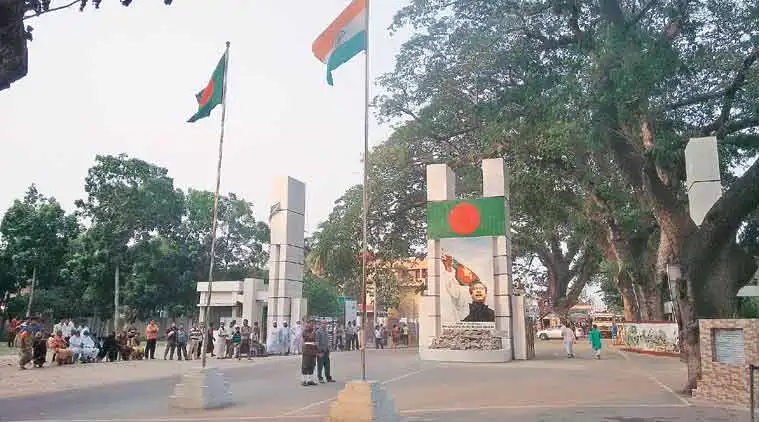
- Regional Sensitivities over “Akhand Bharat”. Neighboring countries (such as Nepal, Bangladesh, and Pakistan) have occasionally expressed diplomatic unease over the historical/cultural concept of Akhand Bharat (undivided India), which encompasses territories beyond modern borders. Critics and foreign observers could scrutinize the name change through a regional geopolitical lens.
- The “India” Brand and Pakistan. Historically, Pakistan’s founder Muhammad Ali Jinnah objected to India retaining the name “India” after the 1947 Partition, arguing it implied sole historical continuity of the subcontinent. During the 2023 Bharat debate, Pakistani media and commentators speculated about laying claim to the name “India” if New Delhi formally abandoned it at the UN.
My comment: They can’t claim it anyway.
- Massive Technical & Digital Overhaul
- ISO Country Codes (IN / IND). Changing the country’s name does not automatically change its two-letter (IN) and three-letter (IND) ISO 3166 codes. Requesting a change to BH is impossible because BH is already assigned to Bahrain (and BR to Brazil). Keeping IN while calling the country “Bharat” avoids breaking global banking (SWIFT) and aviation systems, though it creates a permanent mismatch between the name and the code.
- Internet Infrastructure (.in Domain). India’s country-code top-level domain (.in) is tied to its ISO code. Migrating millions of governments, banking, and commercial websites—or securing a new domain extension from ICANN—would be a massive, multi-year cybersecurity and technical undertaking.
- Global Treaties, Passports & Brand Equity
- Treaty and Alliance Updates. India would need to update its nomenclature across hundreds of bilateral treaties and multilateral groupings—including BRICS (where the “I” stands for India), the UN Security Council, WTO, and WHO.
- Passports and Currency. Over 90 million active Indian passports, Overseas Citizen of India (OCI) cards, and Reserve Bank of India (RBI) currency notes bearing “Republic of India” would require phased replacement, alongside notifying global border control agencies to prevent travel disruptions.
- Loss of Global Brand Recognition. Decades of global economic, diplomatic, and tourism branding (such as “Incredible India” and “Make in India”) carry immense international recognition that would require costly global re-education campaigns.
Past comment from UNO: (Source—NDTV)
The United Nations “will change India’s name to Bharat in UN records” when New Delhi completes all the formalities for the same, a spokesperson for the global body told NDTV today. “When India completes the formalities to change the name, they will inform us and we will change the name at the UN (records),” United Nations Secretary General’s chief spokesperson Stephane Dujarric said.
The statement comes days after a huge controversy broke out over the shift to India from Bharat in the dinner invitation from President Droupadi Murmu to foreign leaders attending the G20 summit this weekend.
“It’s not for the UN to comment on the debate,” Mr. Dujarric, who was speaking on the sidelines of the G20 summit in Delhi, said.
“As long as the formalities are done, the UN will change the name too. It’s a bureaucratic issue when it comes to what the UN needs to do,” he added.
THAROOR’S Comment:
“While there is no constitutional objection to calling India ‘Bharat’, which is one of the country’s two official names, I hope the government will not be so foolish as to completely dispense with ‘India’, which has incalculable brand value built up over centuries,” Shashi Tharoor, a lawmaker for the Indian National Congress party, posted on X, the site formerly known as Twitter.
“We should continue to use both words rather than relinquish our claim to a name redolent of history, a name that is recognized around the world,” he added.
COMMENT: It is sad that Mr. Tharoor used the word ”foolish”. “Emotional” could be a better choice.
My 2 Penny:
I agree almost mostly with Mr. Tharoor—excepting, state that ‘ it is not foolishness but EMOTION’ which should be controlled in this case.
I also argue ‘INDIA’ provides us connectivity to INDUS, and INDIC CIVILIZATION.
We, then, wherever possible—use “BHARAT”—but officially remain INDIA.
JAI HIND.