VENEZUELAN CRISIS
FROM INDIAN PERSPECTIVE
SARASIJ MAJUMDER
OIL RESERVE: –
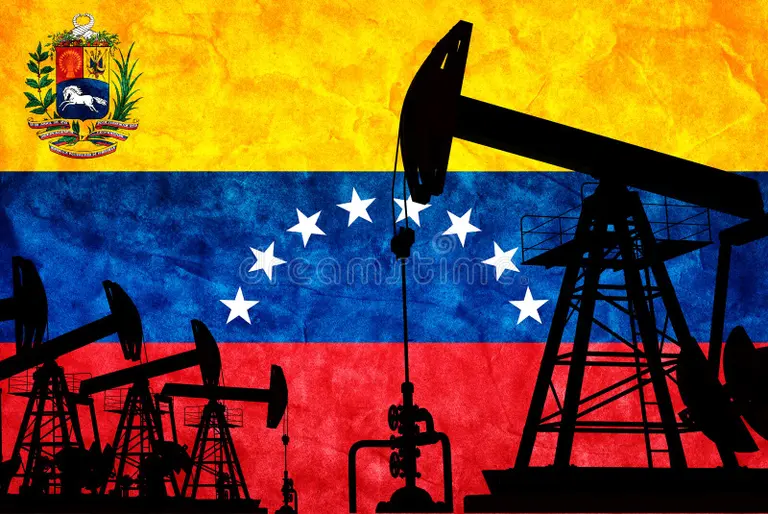
As of January 2026, Venezuela holds the world’s largest proven oil reserves, estimated at approximately 303 billion barrels. This accounts for roughly 17–20% of the total global proven reserves, surpassing Saudi Arabia, which ranks second with approximately 267 billion barrels.
I suspect—there may be much more quantity, yet to be mapped.
Key Characteristics of Venezuela’s Oil
Crude Type: The vast majority of these reserves consist of extra-heavy, sour crude oil, which is more dense, viscous, and difficult to refine than the “light, sweet” crude found in regions like Saudi Arabia or the U.S.A.
Primary Location: Most reserves are located in the Orinoco Belt (Faja Petrolífera del Orinoco), a region in eastern Venezuela covering over 55,000 square kilometres.
Production Gap: Despite its massive reserves, current daily production is low—approximately 1 million barrels per day (bpd)—compared to a peak of 3.5 million bpd in the late 1990s.
Current Geopolitical Situation (January 2026)
Following the recent U.S. military capture of former Venezuelan President Nicolás Maduro in early January 2026, the status of these reserves has entered a new phase:
U.S. Strategic Plans: President Donald Trump has stated that the U.S. will take control of Venezuela’s oil reserves to rebuild that country’s shattered energy sector.
Infrastructure Revival: The U.S. aims to invite major American energy firms (such as Chevron, ExxonMobil, and ConocoPhillips) to invest billions into the country’s dilapidated infrastructure, which has suffered from decades of neglect and mismanagement.
Estimated Investment: Analysts estimate it will require between $58 billion and $180 billion to restore production to its historical peak levels, a process that could take up to a decade.
WHO WAS PURCHASING CRUDE FROM VENEZUELA:
As of January 2026, the primary purchasers of Venezuelan crude oil are China and the United States, along with India. India recently stopped its imports due to U.S. policy shifts.
- China (Largest Buyer)
China is Venezuela’s largest customer, accounting for approximately 68% to 85% of all exports in 2025.
Purchasing Method: Much of this oil is used to repay multibillion-dollar debts owed by Venezuela to Beijing. Means—USA was getting nothing as there was no Petrodollar transaction. THAT WAS MAIN PROBLEM OF USA. THAT WAS WHY USA PUT SANCTION.
Target Refineries: The crude (primarily heavy Merey 16) is favoured by Chinese “teapot” refineries—small, independent facilities that process it into bitumen for road construction.
Tactics: To bypass sanctions, these shipments often involve ship-to-ship transfers and rebranding to mask their origin. UNCLE SAM WAS GETTING BYPASSED!!
- United States
The U.S. remains the second-largest customer, receiving about 23% of Venezuela’s exports in 2023–2025.
Major Companies: Chevron is the primary driver of these flows, operating under a special U.S. license to export crude from its joint ventures in Venezuela to U.S. Gulf Coast refineries. Chevron is an operator also in VENEZUELA.
Top Refiners: U.S.-based refiners such as Valero Energy, Phillips 66, and PBF Energy have been significant buyers, as their complex Gulf Coast facilities are specifically configured to process Venezuela’s heavy-sour crude.
- India (Recent Exit)
India was historically a top-three buyer but stopped all imports in May 2025.
Reason for INDIA’S Withdrawal: Major refiners like Reliance Industries (RIL) stopped purchases after the Trump administration threatened a 25% tariff on goods from any country importing Venezuelan oil.
Current Status: India has not imported Venezuelan oil for several months as of January 2026 to avoid U.S. financial penalties.
- Other Historical and Minor Buyers
Spain & Cuba: Both countries have consistently imported small amounts, accounting for roughly 4% each of total exports in recent years.
Europe: Companies like Repsol (Spain) and Eni (Italy) previously received crude as debt repayment, though some of these licenses were revoked or suspended by the U.S. in early 2025.
ONGC VIDESH, & OTHER INDIAN COMPANIES:
As of January 2026, ONGC Videsh Limited (OVL)—the overseas arm of India’s state-owned ONGC—holds significant but currently “stranded” investments in two major Venezuelan oil projects. Following the early January 2026 capture of Nicolás Maduro by U.S. forces, these assets are under renewed focus as potential sources of major financial recovery for India.
Key Investments and Stakes:
San Cristóbal Project (40% stake): OVL acquired this interest in 2008 and has invested approximately $529 million to date.
Carabobo-1 Project (11% stake): OVL, alongside Indian Oil Corporation (IOC) and Oil India (OIL), holds this collective interest, with OVL’s specific investment totalling roughly $241 million.
Current Financial And Operational Status (January 2026)
Pending Dividends: OVL has approximately $500 million to $536 million in unpaid dividends stuck in Venezuela, primarily from the San Cristóbal field. Some analysts estimate the total recoverable dues could reach nearly $1 billion if subsequent unaudited periods are settled.
Operational Stagnation: Due to years of U.S. sanctions and lack of modern technology, production at these fields has dropped to a fraction of their potential, with many wells described as practically “dried up.”
Special Approvals: In 2024, OVL sought special U.S. licenses to operate these projects under a “Chevron-style” model (allowing for operations despite sanctions), but these approvals remained pending as of early 2026.
IMPACT OF 2026 U.S. INTERVENTION:
Potential Recovery: The U.S. military capture of Maduro and the subsequent move to take control of Venezuela’s oil sector is viewed as a “Golden Ticket” For OVL. Analysts believe this shift could finally unlock the long-pending dividends and allow OVL to resume active production.
Market Risks: While a production revival would help OVL recover debt, it also poses a medium-term risk. Increased global supply from a revived Venezuelan sector could lead to lower international crude prices, potentially impacting the overall profitability of OVL’s global upstream portfolio.
However—since there will be no sanction now—RIL of India can buy this crude at $7-10/- less per barrel, refine, and sale premium GASOLENE, and DIESEL to Europe.
It may me noted that RIL’s JAMNAGAR REFINARY is second best in the world to process this heavy-Sour crude.
First Citizen of USA, and Ambanis are in excellent terms, for quite some time.
GLOBAL REACTION:
As usual, it is mixed. EU is divided. China threatened. Russia expressed a cautious anger, but can’t do much as it is stuck up in the mud of Ukraine! Russia need Uncle Sam’s support there to make a favourable peace deal!
India has made very right observation. It expressed concern about people of Venezuela, and stopped at that. India has not said anything against USA. SECULARISTS, MORALISTS, AND MARXISTS OF INDIA CAN SAY ANYTHING!! We don’t care, as long as India’s interest is served. Our Trade Deal is in balance!!
What Emerge: —
- We can’t say at this stage whether aggression of Trump will be fully supported by Senate, and their Judiciary.
- It is not the end. Mid-game of this Chess game will start now. END GAME is still further away. USA gained, and sealed Successful Regime change, and establishing that Regime is pending, where USA’s success rate is not great!
- India has to play her Cards very well!! And India started well.
- China is already a looser. As of January 2026, China’s outstanding loan balance in Venezuela is estimated to be between $10 billion and $19 billion. This debt is the remainder of approximately $60 billion in oil-backed loans provided by Beijing between 2007 and 2015.
- Some analysts suggest the total bilateral debt, including accrued interest and stabilized balances, could be as high as $13–19 billion.
- Total Financial Exposure: When including broader financial aid, infrastructure promises, and unfulfilled investment commitments, some reports estimate China has over $100 billion at stake in the country.
- And China will not get the cheap Crude as well.
END
DATA: — PUBLIC DOMAIN.
IMAGE: GOOGLE
ANALYSIS/OPINION: BLOGGER
DISCLAIMER: ISSUED FOR INFORMATION. BLOGGER HAS 40 YEARS OF EXPERIENCE IN DEVELOPING OIL AND GAS INDUSTRIES, IN INDIA, AND ABROAD. WAS INVOLVED WITH OVL.