SIMÓN BOLÍVAR
1783–1830|VENEZUELA
SARASIJ MAJUMDER
There’s a road in South Delhi: SIMÓN BOLÍVAR MARG. Most Delhiites don’t know where it is. It is near RIDGE, connecting Sardar Patel Marg to Vande Mataram Marg.
Worse—most of INDIANS may not know who he is, rather was. —World History taught in India abandoned him.
But most of Indians know about ‘Kemal Ataturk’. Qazi Nazrul Islam from Bengal wrote a poem which is translated in URDU, and TURKEY.
Still, let me introduce this South American Greatman to you.
Simón Bolívar known as El Libertador (The Liberator), was a Venezuelan military and political leader who was instrumental in the independence of present-day Venezuela, Colombia, Ecuador, Peru, Panama, and Bolivia from the clutch of Spanish Empire.
Early Life: He was born on July 24, 1783, in Caracas, present day Capital, to one of the wealthiest aristocratic families in Venezuela.
By age 9, Bolívar had lost both parents to tuberculosis. Orphaned but not abandoned, he was educated in Europe under the tutelage of Simón Rodríquez, a radical intellectual who had joined a failed 1797 rebellion in Venezuela. Steeped in Enlightenment ideals and outraged by Spain’s economic exploitation of South America, Bolívar became a committed republican. “I will not rest (my) body or soul until I have broken the chains with which Spanish power oppresses us,” he pledged to his tutor in 1805.
He was educated in Europe, where he was exposed to Enlightenment in philosophy and witnessed Napoleon’s coronation, which further inspired his revolutionary ambitions.
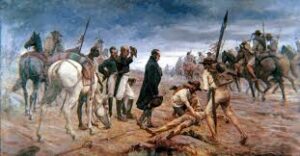
The Struggle for Venezuela: When Napoleon imprisoned Spain’s King Ferdinand VII in 1808 and installed his own brother on the throne, Spanish authority faltered. Bolívar seized the moment. In 1811, he joined the revolution that overthrew Spanish rule in Venezuela and established the First Venezuelan Republic. But within a year, royalist forces regained power, driving Bolívar into exile.
By 1813, he had rebuilt his forces. Bolívar’s “Admirable Campaign” swept across the Venezuelan countryside in 1813, bridging class and race divides. “He was a son of the elites whom the elites could trust,” says David A. Bell, a Princeton University history professor and author of ‘Men on Horseback: The Power of Charisma in the Age of Revolution’, “but at the same time, he spoke in grandiose terms of equality and opportunity for all, of ending slavery (which he failed to do) and he was an inspiring figure on the battlefield.”
He welcomed formerly enslaved men into his army and freed all those were enslaved after Venezuela achieved independence. Yet he could still be ruthless: His “Decree of War to the Death” ordered the execution of any Spanish-born civilians not actively aiding the patriot cause.
On August 7, 1819, Bolívar’s surviving army and reinforcements decisively defeated royalists at the Battle of Boyacá. Days later, Bogotá erupted into celebration as Bolívar entered the city. By year’s end, he oversaw the creation of Gran Colombia—a vast republic encompassing much of present-day Venezuela, Colombia, Panama and Ecuador. Victory at the Battle of Carabobo in June 1821 secured Venezuelan independence once and for all.
Thus, present Venezuela is known as second Republic.
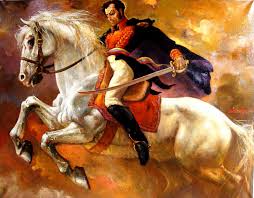
His armies swept south, liberating Ecuador, Peru and finally, Upper Peru—renamed Bolivia in his honour in 1825. Bolívar drafted its constitution, abolishing slavery and enshrining civil rights while also making himself president for life with the power to choose his successor. “The Liberator” stood at the pinnacle of influence, his vision of a South American federation seemingly fulfilled—and his authority spanning nearly the entire northern half of the continent.
But soon internal rivalry erupted. The thread of unity was too fragile and snapped.
Death and Legacy: Disillusioned by internal regional rivalries that caused the collapse of Gran Colombia, Bolívar resigned his presidency and died of tuberculosis on December 17, 1830, near Santa Marta, Colombia.
Simon Bolivar’s last words were spoken on his death bed when he muttered “damn it! How will I ever get out of this labyrinth?” He was referring to the labyrinth of suffering, an inherent part of our human experience in this world.
BOLÍVAR’S CONTEMPORARY INFLUENCE IN VENEZUELA:
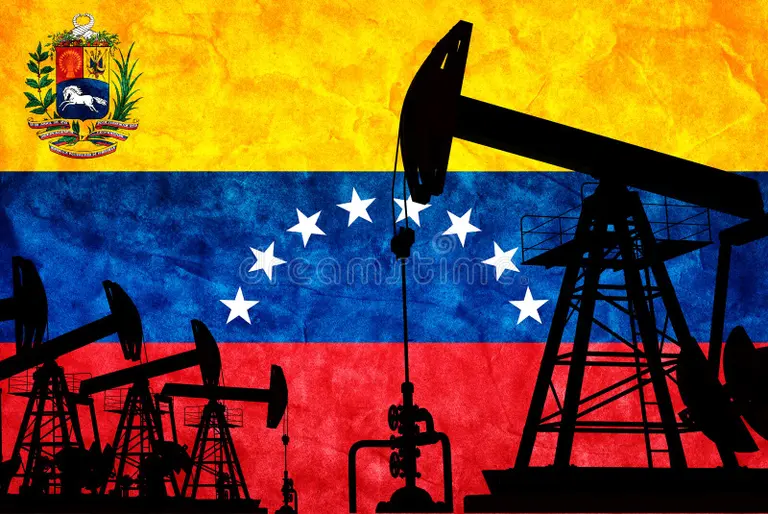
As of 2026, Bolívar still remains the central figure of Venezuelan national identity.
Official Name: The country’s official name is the Bolivarian Republic of Venezuela.
Currency: The national currency is the Venezuelan Bolívar.
Public Memorials: He is honoured with the National Pantheon of Venezuela in Caracas, where his remains are interred, and the Casa Natal del Libertador, his birthplace is a major cultural site.
REFERENCE:
There are many books on him. If you want to read only one—I will recommend:
El Libertador: Writings of Simón Bolívar by DAVID BUSHNELL, Editor / OXFORD UNIVERSITY PRESS
NOTE: I will expand this BLOG in the near future.