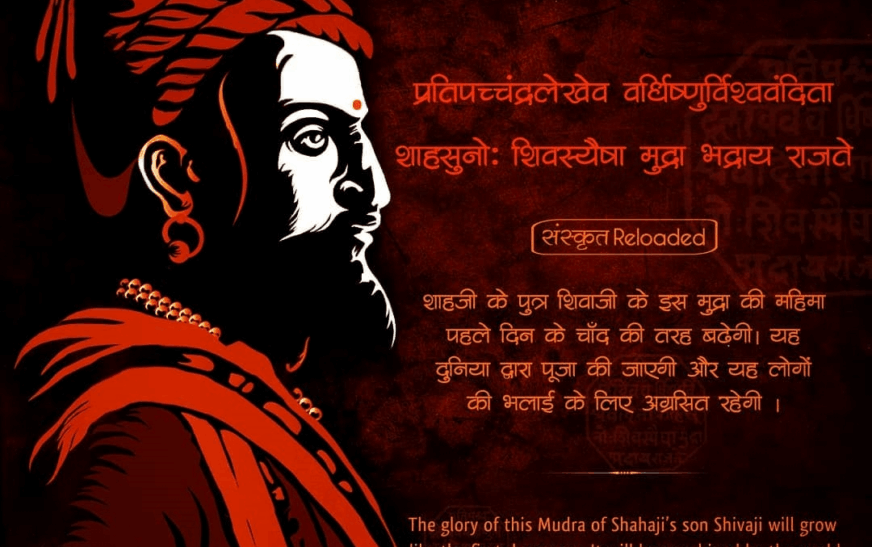
CHHATRAPATI SHIVAJI MAHARAJ
SARASIJ MAJUMDER
Chhatrapati Shivaji Maharaj (1630–1680) was a legendary Maratha warrior king who founded the independent Maratha Empire [“Hindavi (Hindu) Swarajya”] in Western India. Born at Shivneri Fort, to a local Chieftain, he established a progressive rule, founded a strong navy, and utilized guerrilla tactics (Ganimi Kava) against the Mughal Empire and Adil Shahi Sultanate.
He was crowned Chhatrapati in 1674, achieved through revolutionary military tactics and a highly sophisticated administrative framework.
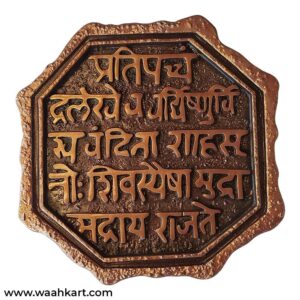
He introduced COIN in his name.
Here is a summary of key information about Shivaji Maharaj, for understanding his life, which can be found in various online public domains, and two books referred at the end. I have read, and used those sources, to compile this BLOG.
LIFE DETAILS:
Birth: February 19, 1630, at Shivneri Fort near Pune.
Parents: Shahaji Raje Bhonsle (father) and Jijabai (mother).
Coronation: Crowned Chhatrapati (Sovereign) in 1674 at Raigad Fort.
Death: April 3, 1680, at Raigad Fort.
ACIEVEMENTS:
Founder of Maratha Empire: Carved out an independent kingdom from the Adil Shahi sultanate of Bijapur.
Military Genius: Pioneered guerrilla warfare tactics and established the then strongest Navy of India, earning him the title “Father of Indian Navy”.
Fort Management: Captured, rebuilt, modified and constructed over 360 Forts, including Raigad, Torna, and Pratapgad.
Administration: Established a council of eight ministers (Ashtapradhan Mandal) and promoted Marathi/Sanskrit language over Persian Language in King’s Court.
Policies: Known for religious tolerance, women’s honor, and justice, often favoring merit over birth right.
TIMELINE OF MAJOR BATTLES & MILITARY MILESTONES:
The Maratha military strategy relied on Ganimi Kava (guerrilla warfare), leveraging the rugged and mountainous Deccan terrain to defeat much larger forces.
1645–1647: Captured first major forts, including Torna, Kondhana, and Chakan, from the Bijapur Sultanate.
1656: Conquered Javali from Chandrarao More, which provided a strategic gateway to the Konkan area.
1659 (Nov 10): Battle of Pratapgad – Historically significant for the killing of Adilshahi general Afzal Khan in a personal encounter, followed by a decisive Maratha victory.
1660 (July 13): Battle of Pavan Khind – Baji Prabhu Deshpande led a heroic rearguard action to allow Shivaji’s escape from the siege of Panhala. (REFER MY BLOG PUBLISHED BEFORE ON THIS)
1663 (April 5): Daring midnight raid on Shaista Khan (Mughal Viceroy) at Lal Mahal in Pune, forcing him to flee through window, after losing three fingers.
1664 (Jan): First Sacking of Mughal Treasury at Surat, a wealthy Mughal port, to replenish the Maratha treasury.
1665 (June): Treaty of Purandar – After a siege by Jai Singh I, Shivaji surrendered 23 forts and briefly entered into Mughal vassalage.
1666 (Aug 17): Legendary Escape from Agra after being placed under house arrest by Emperor Aurangzeb.
1670 (Feb 4): Battle of Sinhagad – Tanaji Malusare famously recaptured the fort, though he lost his life in the struggle.
1674 (June 6): Coronation at Raigad – Formally crowned as Chhatrapati, establishing Hindavi Swarajya (self-rule).
1677–1678: Dakshin Digvijay – A major southern campaign into Karnataka and Tamil Nadu, capturing Gingee and Vellore.
Administrative Reforms: The Ashta Pradhan System.
Shivaji Maharaj established a centralized cum decentralized administration governed by a council of eight ministers known as the Ashta Pradhan Mandal. They were:
Peshwa: Prime Minister, General administration and welfare of the state.
Amatya: Finance Minister, Managing public accounts and the state’s Income, and expenditure.
Mantri: Chronicler, Maintaining records of the King’s daily activities and court proceedings.
Sachiv / Secretary: Handling royal correspondence and ensuring official orders were drafted correctly.
Sumant: Foreign Minister, Managing diplomacy and relations with other states.
Senapati / Commander-in-Chief: Organization, recruitment, and discipline of the army.
Nyayadhish/ Chief Justice:Administering civil and military justice based on ancient Sanatan laws.
Pandit Rao: High Priest, Overseeing religious matters, charities, and moral conduct.
KEY GOVERNANCE POLICIES:
Revenue Reform: Replaced the feudal Jagirdari system with the Ryotwari System, where the state collected taxes (roughly 33% of produce) directly from peasants to prevent middleman exploitation.
Taxation: Introduced Chauth (1/4th of revenue for protection against raids) and Sardeshmukhi (10% additional levy) on non-Maratha territories.
Military Discipline: Soldiers were paid in cash from the state treasury rather than land grants, ensuring direct loyalty to the King.
Fort Administration: Each fort was managed by three officers of equal rank (Havaldar, Sabnis, and Sarnobat) to provide a system of checks and balances against treachery.
Naval Vision: Recognized as the Father of the Indian Navy for building a strong coastal fleet and maritime forts like Sindhudurg to counter European and Siddi powers.
ICONIC MOMENTS OF LIFE:
Battle of Pratapgad (1659): Defeated the Bijapur general Afzal Khan.
Attack on Shaista Khan (1663): A daring night raid in Pune. Mughal Viceroy escaped and defeated.
Escape from Agra Fort (1666): Escaped from Aurangzeb’s captivity.
FORTS:
Shivaji Maharaj controlled, at his peak, 370 Forts, each serving a specific military or administrative or Residential purpose. Some forts were all in one, or dual-purpose forts.
Chhatrapati Shivaji Maharaj’s naval vision and Fort Network were the twin pillars of his Hindavi Swarajya. In recognition of their architectural and strategic brilliance, 12 Maratha forts were officially inscribed as UNESCO World Heritage Sites in July 2025.
NAVAL STRATEGIES & WARFARE TACTICS:
Shivaji Maharaj is hailed as the “Father of the Indian Navy” for establishing an indigenous naval force to counter European powers and the Siddis of Janjira.
“Jalameva Yasya, Balameva Tasya” (जलोमेब यस्य:, बलोमेब तस्य: |) : His central doctrine, meaning “He who rules the seas is all-powerful,” guided his focus on maritime dominance.
Guerrilla Warfare at Sea: He pioneered “Guerilla Warfare at Sea,” using swift, agile ships to launch surprise attacks. His fleet preferred “green water” (coastal) operations, luring larger European vessels into shallow creeks where their heavy artillery was less effective.
Tactical Fleet Composition: The Maratha Navy avoided keeping ships in one location, instead spreading them into small, versatile squadrons for better agility and versatility.
Boarding & Hand-to-Hand Combat: Unlike European navies that relied on broadside cannons, Maratha sailors specialized in boarding enemy ships for hand-to-hand combat, neutralizing the enemy’s superior firepower.
Shipbuilding Innovation: He established shipbuilding yards at Kalyan, Bhivandi, and Pen, constructing diverse vessels like Gurabs (heavy gunships) and Galbats (fast assault boats). At its peak, his fleet reached 700 vessels.
KEY SEA FORTS (JAL-DURG):
Sindhudurg: Built in 1664 on Kurte Island as the Maratha naval capital; it featured unique underwater foundations to withstand the force of Arabian Sea.
Vijaydurg: Known as the “Eastern Gibraltar,” this fort was strategically positioned on a natural creek and featured a 200-metre hidden underwater wall to damage approaching enemy hulls.
Suvarnadurg: The “Golden Fort,” built to monitor maritime trade routes and protect the Konkan coastline from invasions.
Khanderi & Underi: These “Harbour Sentinels” near Mumbai were used to challenge the naval dominance of the British and Siddis.
STRATEGICALLY IMPORTANT HILL FORTS:
Raigad: The “Capital of Swaraj,” it was virtually impregnable due to its steep cliffs and served as the central command for both land and naval operations.
Fortress Bale Killa is located in Raigad fort. It was the Maratha capital for 26 years before Raigad Fort was built; famous for its Sanjivani Machi, a three-layered defensive structure designed to repel prolonged sieges.
Pratapgad Fort: It is a Historical landmark, and is located in the Satara district of Maharashtra, India, approximately 21–24 km from the popular hill station of Mahabaleshwar. Situated in the Western Ghats at an altitude of 1,080 meters, this historic mountain fort was built by Chhatrapati Shivaji Maharaj in 1656. Built to control the Javali basin; it featured a unique double-line fortification and served as the site of the historic victory over Afzal Khan.
Panhala Fort: One of the largest forts in the Deccan, it was designed as a self-sustaining settlement with underground granaries to survive long-term blockades.
Gingee Fort (Tamil Nadu): Representing his “Southern Campaign,” this “Troy of the East” provided strategic depth and demonstrated his ability to project power far beyond Maharashtra.
Historically, Britishers took control of India from Maratha, and not from Mughals, who lost control of the empire, when Peshwa Bajirao invaded and conquered the Mughal capital of Delhi between 1 March and 2 April 1737. Bajirao conquered Delhi in 1737, but didn’t settle, and ruled India from Delhi.
Maratha Kingdom over the time became a Great Maratha Empire, which lost decidedly in third Eng- Maratha war in 1818, and East India Company took control of large part of India, thus ending Maratha rule of 170 years.
WHAT EMERGE:
1 – Most (may be all) of the Rajput kings and even Rani Laxmibai fought with the invaders to protect their kingdoms. Shivaji Maharaj fought to CREATE a kingdom. A Hindu Kingdom. And that’s a big difference.
2- Other warrior kings believed in win or die on the battlefield. Don’t turn your back was their resolve. Only Shivaji believed in the adage ‘he who fights and runs away, lives to fight another day’ and out of that was born the amazing Ganimi Kava ( guerrilla warfare ) famously pioneered by Chhatrapati Shivaji Maharaj in the 17th century to defeat larger, well-equipped armies (such as the Mughals) using speed, mobility, and repeated surprise attacks. He re-wrote the ‘Rule Book of War’.
3- Respect for women and other Religions. Which these moronic invaders — all, Pathans, Mughals and British didn’t have and shown.
4 – The famous Sanskrit saying ‘ Sarbbonasho Samutpanne , Ardhyam Tyajati Panditaha. ‘[“सर्वनाशे समुत्पन्ने अर्धं त्यजति पण्डितः” ( when everything is going to be lost, the wise give up half )]
The treaty of Purandar was a classic example of above. When he was completely cornered, he said “SORRY” to AURANGZEB (the moron Rahul Gandhi who calls Savarkar a ‘Maafi Veer’ should read Shivaji’s history).
He agreed to give away 23 forts he has captured ( that he fooled Aurangzeb by listing two names of the same fort , is another story). Agreed to appear in Delhi court of Aurangzeb to pay respects etc. Then escaped from Agra and took all the forts back and more.
Classic ‘Guerilla Tactics’—One Step Forward—Two Steps Backward.
5 One of the few kings of that time, who had the wisdom to have a Ashtapradhan Mandal, council of eight wise ministers as advisors on how to run the kingdom. It was advised by Vishnugupta Chanakyo, many years ago.
6 Strict and Impartial administration made him popular to all. A wrong is wrong and a crime is a crime, no matter who commits it. Even the close sardars or relatives were punished for their wrong doings. And brutal punishments were awarded. Chopping of limbs, execution under elephants’ foot, KADELOAT (throwing a person from takmak point in deep valley ). All done to ensure fear of punishment sets in for future wrongdoers. Takmak Tok (or Takmak Point) is a historic cliff edge on the Raigad Fort used by Chhatrapati Shivaji Maharaj to punish criminals by throwing them over the 1,200-foot drop. It is also known as a “punishment point” or KADELOT (execution point).
7 – Patience And Strategic Thinking: When Afzal khan came with a huge unbeatable army and tried to provoke Maharaj by destroying villages, razing temples to the ground, even smashing the murti of the most revered TULJABHAWANI, Shivaji did nothing. He waited. Feigning fear. Goading him to come to Jawali and Pratapgad , where his elephants and army would be useless, and then when Afzal Khan tried to stab him , he took out his intestines with Bagh Nakh and Bichhwa hidden in his sleeve.
8 He had the foresight to refuse permission to the British East India Company to set business, knowing that their intentions were beyond business. This foresight was not seen in Mughals, and Sultanates of other parts of India, including Bengal.
9 The objective to start a navy, knowing that the foreign powers come by the sea and we needed to have sea forts and strong navy to defend our land.
- Shri Samarth Ramdas Swami (1608–1682) was a 17th-century Marathi saint, philosopher, and poet, was spiritual guide to Chhatrapati Shivaji Maharaj. And Mata Bhawani was his Goddess. Shivaji was a Sanatani to the core.
JAY SHIVAJI, JAY MATA BHAWANI, JAI HIND!
References:
- SHIVAJI AND HIS TIMES—By Sir Jadunath Sarkar.
- THE LIFE OF SHIVAJI MAHARAJ— Original by K. A. KELUSKAR, || translated, and adopted by: N. S. TAKAKHAV.