
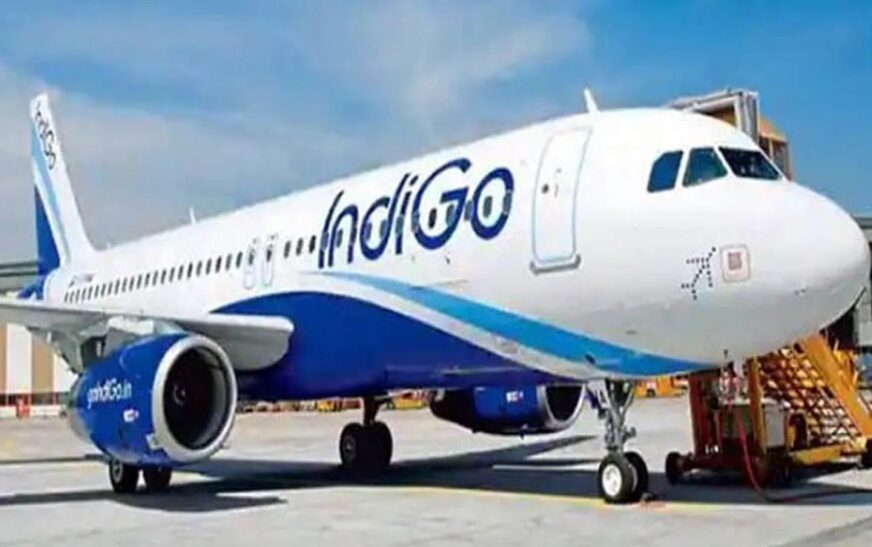
RISE & RISE OF INDIGO,AND THEN FALL.
SARASIJ MAJUMDER
IF A KING ELEPHANT GETS STUCK UP IN MUD—EVEN A TADPOLE PISSES ON IT!!!
That is the present case with INDIGO. For some bad commercial, and operational judgments, and decisions taken, and continued by the BEHEMOTH to tide over the financial crisis it faced due to COVID pandemic, it landed itself in a mess!
One must understand—size can’t absorb everything in this segment!
What should have been a short-term measure—GREED crept in, and Indigo tried to continue with the same as a routine operation.
In came DGCA circular of FDTL in November, and the crack started to show immediately in NOVEMBER itself. Left unattended, schedule burst in first week of December.
And immediately several conspiracy theorists brought out their daggers as analytical TOOLS! Media is ever ready to sensitize this.
But—believe me, I am not an admirer of INDIGO. Want just to jot down the truth impartially.
The Beginning:
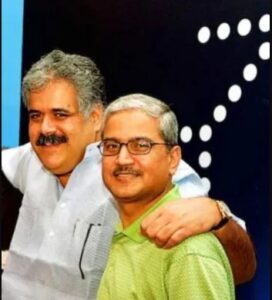
In 2005, Rahul Bhatia of INTER GLOBE ENTERPRISES AND AVIATION and veteran Rakesh Gangwal came together with a vision to run a lean, no-nonsense airline that would rely on scale of operation, discipline and efficiency rather than luxury.
They placed an audacious order for 100 Airbus A320 aircraft at the 2005 Paris Air Show even before the airline’s first flight. Many doubted them. Yet on August 4, 2006, IndiGo took off with three A320s connecting Delhi and Mumbai.
My first travel by Indigo was on 2007, Delhi to Mumbai. I liked the punctuality. However, I was a GOLD FF CARD HOLDER with IA/AI and used to travel by that Airline for free Lounge Facility on Economy Ticket, domestic, as well as International.
I was quite a frequent flier. My colleagues used to say that my annual flying hours is more than that of many Commercial Pilots!
The Business Model:
IndiGo followed the ‘principles’ of global low-cost legends but tailored them to Indian condition with an obsessive focus on cost and punctuality. Most of the Indians value economy over comfort! Punctuality attracted business passengers.
An aircraft family, all manufactured by one Company minimizes maintenance cost, training and spare parts inventory. Any Engineer, who worked in Manufacturing, and Maintenance segment, knows this.
Point-to-point routes instead of expensive hub system, initially cuts down OVERHEAD COST.
Sale-and-leaseback financing converted Aircraft Capital Cost into cash flow.
High aircraft utilization and quick turnarounds also saved money.
Ancillary revenue streamed from baggage, meals and priority services accounted for nearly 20 per cent of revenue.
IndiGo did not offer glamour, luxury and premier class service. It offered predictability. While Kingfisher went premium and collapsed, and Jet Airways struggled to balance costs and legacy operations, IndiGo delivered affordable fares without sacrificing reliability. Its on-time performance touched 86 to 87 per cent during peak years, with over 1,600 daily flights to over 100 destinations.
GROWTH STORY:
IndiGo’s growth story was not luck. The airline expanded in a measured, calculated manner.
14 aircraft by the end of 2007
25 aircraft in 2009
100 aircraft in 2015
250 by late 2019
300 by January 2023
As of September 2025, the airline operates a fleet of narrow-body aircraft consisting of Airbus A320-200, A320neo, A321neo and ATR 72-600 aircraft for passenger operations, and Airbus A321-200/P2F aircraft for cargo operations, making for a total of 397 aircraft.
Over 80% of the airline’s aircraft are narrow-bodies, which compromised sitting comfort of passengers. Closely spaced Rows are a bother for a tall person with longer Legs.
From the point of view of the PASSENGER COMFORT—Economy middle sits of INDIGO is truly ‘Cattle Class’.
The scale of its Airbus deals stunned the world. A 300-A320neo order in 2019 worth around Rs 2.3 lakh crore was followed by a record 500-aircraft order in 2023 worth an estimated $50 billion, the largest single commercial aviation order in history.
The airline has since also ordered 30 Airbus A350-900s with 70 purchase options for future wide-body expansion.
OPERATION 2025:
In 2025, IndiGo aims for significant growth, operating over 2,700 daily flights to more than 140 destinations (around 96 domestic, 44 international), with plans for further expansion into Asia, Africa, and Europe, solidifying its role as India’s largest carrier. Key hubs remain Delhi, Mumbai, Bengaluru, Chennai, Hyderabad, Kolkata, and Kochi, supporting extensive domestic routes and growing international connections.
Key Figures in 2025:
Daily Flights: 2,700+.
Total Destinations: Around 140+.
Domestic Destinations: Approx. 96+ (Maharashtra & UP with most).
International Destinations: Approx. 44+ (UAE, Saudi Arabia, Malaysia, Thailand leading).
Hubs: Delhi, Bengaluru, Mumbai, Chennai, Hyderabad, Kolkata, Kochi.
Strategic Expansion was on anvil.
IndiGo was aggressively expanding its international footprints, targeting new cities in Southeast Asia, Central Asia, and Eastern Africa to boost global presence.
The airline aims to connect 90% of India’s population via its connected airports, noted The Economic Times.
Punctuality at six major metro airports showed IndiGo leading with 90.6 % on-time flights, followed by Akasa Air at 87 % and Air India Group at 84.5 %. Bengaluru airport reported the best punctuality among metros at 93 per cent. (4 Oct. 2025)
Key Takeaway: IndiGo’s 2025 strategy focused on massive scale of operations, connecting nearly all of India domestically while rapidly growing its international network, leveraging its large fleet and strategic bases.
PROFITABILITY:
The numbers translated into dominance. By FY23, IndiGo had a revenue of approximately Rs 55,877.89 crore and a net profit of around Rs 2,998 crore, with a domestic market share of about 62.1 per cent. Before recent melt down, that figure was close to 64.2 per cent.
PARTNERSHIP BROKE:
The Partnership That Built the Empire and Then Got Cracked Open.
The success of IndiGo was built on the synergy between its two founders. Rahul Bhatia supplied cost discipline and deep understanding of Indian regulations. Rakesh Gangwal shaped OPERATIONAL VISION and global strategy.
Their combined leadership transformed IndiGo into India’s most successful airline. Yet cracks began to appear. By 2019, governance disputes surfaced publicly. Gangwal pushed for aggressive expansion and tighter corporate governance, Bhatia preferred control and cautious approach.
In 2022, Gangwal resigned from the board. By 2025, he had sold most of his shareholding and exited the airline completely. The departure marked the end of one of Indian aviation’s most successful partnerships.
I also sold my personal equity holding of the Airlines last April, anticipating not much gain in future. I purchased each share @Rs.1,800/- long back. In the September quarter of FY2026, the airline reported a net loss of Rs 2,582 crore.
However, on 8th December I repurchased @ Rs 5,000/- price/ share, good number of INDIGO shares to cash on the crisis. It may stabilize around Rs. 5,000/- +/- per share and then recover over time.
ENTERS DGCA:
DGCA (India) – 2025 Enhanced Framework is listed below:
Building upon 2019 foundations, India’s regulator has introduced phased enhancements that address both international alignment and domestic operational realities:
48-hour mandatory weekly rest (increased from 36 hours).
Expanded night duty definition (now 0000-0600, previously 0200-0600).
Strict night landing limits (maximum two landings, reduced from six).
FDP capping formula (flight time + 1 hour maximum).
Quarterly fatigue reporting requirements for all operators.
Optional FRMS implementation pathway for progressive operators.
These frameworks share common ICAO DNA—prioritizing adequate rest and duty limits—yet diverge significantly in implementation specificity, operational flexibility, and regional adaptation strategies.
PRESENT CRISIS:
IndiGo faced significant disruptions in November 2025 due to significant shortage of mainly Cockpit Crews and problem got MAGNIFIED due to FDTL compliance & ATC issues, leading to 1,000+ cancellations & significant fall of On-Time Performance (OTP ~67%).
Target Ratio: Industry analysts suggest a norm of 16 pilots per aircraft (or more) for full compliance and growth, while IndiGo was operating closer to 13/Aircraft, creating shortages.
As per information shared with Parliament on 8th December,2025– Air India and its low-cost arm, Air India Express, having 6,350 and 1,592 pilots respectively and IndiGo having 5,085 cockpit crew—and I couldn’t find out how many of them are Trainee Pilots!
As of late 2025, Air India’s fleet size is around 190-200 aircraft, with numbers fluctuating due to new deliveries and retirements.
IndiGo operated 59,438 of 64,346 approved November flights, recording 951 cancellations. Despite approval for 403 aircraft, only 344 were deployed. DGCA has asked the airline to submit a revised schedule.
Indigo was operating 2,700++/397=about@7 Flights per aircraft.
With new FDTL, the numbers are :
It can operate only about 2000 Flights per day, deploying 350 Air crafts with present strength of Qualified Pilots!
Thus, Indigo, with about 400 aircraft in operation , is short by about 1000+ Pilots. It can’t comply with FDTL unless it cuts down the schedule number.
This shortage caused thousands of flight cancellations, highlighting the risk of a lean ratio and poor crew management in rapid growth, says one article from Business Today.
THE GAP WAS WIDE! AND NEGLECTED BY THE AIRLINE!!
DGCA/Aviation Minister knew this, but did nothing excepting issuing circulars! A Fatal Lapse!! Head of DGCA and Minister must be penalized for negligence.
The latest disruptions in December have exposed manpower and planning vulnerabilities. IndiGo attributed the cancellations to the transition to Phase 2 of the revised Flight Duty Time Limitations that came into force on November 1. It misjudged the number of crew required under new duty norms and severely underestimated staffing needs.
Temporary Exemptions: IndiGo sought and was granted temporary operational exemptions from some FDTL provisions until February 10, 2026, to stabilize its schedule.
DGCA Action: The DGCA responded to the disruptions by ordering IndiGo to reduce its flight schedule by 5% and submit a revised plan, citing crew-planning gaps and transitional difficulties with the new norms.
This is a short term relief granted to solve the problem of a particular Airlines by GOI. The November circular has not disrupted other Airlines.. They have some in-built margin, which INDIGO doesn’t have.
WHAT EMERGE:
INDIGO don’t have enough Licensed and Qualified INDIAN PILOTS on its role to comply with FDTL, as on date. Short-Term Hiring Pilots’ services from abroad will shoot up the fare. INDIGO needs some time, if it has to retain and operate the number of flights untouched.
FUTURE:
The challenges ahead are real. Higher costs, manpower management pressures, fierce comeback plans from Air India, and global uncertainties could continue to test INDIGO’s AIR DOMINANCE IN INDIA.
My assessment: Lehman Brothers didn’t survive, but INDIGO will survive. It has experience, and resources. But, it should get rid of the present CEO.
And GOI shall ask Private Banks to re-vitalize ‘SPICEJET’—by taking equity.
NOTE:
I am sharing three links for you to verify at NOTE—Sl.4,5,&6. I have shared a VDO LINK also at Sl.7.
- All data used in the BLOG are available in public domain. Still, I shared some links.
- Co-relations, and Conclusions are made by the BLOGGER.
- All images are from Google.
- https://share.google/aimode/sAi9ZKUMtXIFIVpDx
- https://safefly.aero/blog-dgca-new-fdtl-rules/
- https://www.icf.com/insights/transportation/pilot-shortage-productivity-data#:~:text=The%20number%20of%20pilots%20employed,of%20the%20existing%20pilot%20pool.
- https://youtu.be/ZAtU7zkBUXo
Disclaimer: No person or Company is attempted to be shown in bad light. Only truth is brought out. The BLOGGER is not responsible for correctness of any data available in public domain, and used in this BLOG.